
Nestled between the Caucasus Mountains and the Black Sea, Georgia is a land of diversity and natural beauty. Its geographical position at the crossroads of Europe and Asia has shaped a rich cultural tapestry, with horse riding woven deeply into its historical and social fabric. We will explore the Horse Riding Culture of Georgia, the symbiotic relationship between the Georgian people and their horses—a bond that has endured through the ages, from ancient civilizations to modern equestrian practices.
Historical Background
The story of horse domestication and its significance in Georgia is as ancient as the land itself, deeply intertwined with the evolution of human societies in the South Caucasus region.
The earliest archaeological evidence of horse domestication in Georgia dates back to the Kura-Araxes culture, around the 4th to the early 3rd millennium BCE.
Excavations in the region have uncovered horse bones alongside human settlements, suggesting that horses were domesticated for various purposes, including riding, agricultural work, and possibly for ceremonial or military uses. Notably, burial sites from this period often contain horse remains, indicating their significant status within society.
These findings highlight the early integration of horses into daily life and their emerging role as symbols of power and prestige.
Artifacts Depicting Horses
Ancient artifacts from Georgia, including pottery, metalwork, and petroglyphs, frequently depict horses, attesting to their importance in Georgian culture from the earliest times. For instance, the Trialeti culture, flourishing in the 2nd millennium BCE, is renowned for its gold and bronze artifacts, many of which feature horse motifs. These artifacts not only reflect the skill and aesthetics of the time but also signify the horse’s role in mythology, warfare, and as a status symbol among the elite.
Introduction of Horses to the South Caucasus Region
The introduction of horses to the South Caucasus is a pivotal event that transformed local cultures and economies. Horses facilitated new forms of mobility, enabling the expansion of trade routes and the exchange of goods, ideas, and technologies between the civilizations of the Near East and the Eurasian steppes. The enhanced mobility offered by horses allowed Georgian tribes to form larger social networks, extend their territories, and increase their influence in the region.
Impact on Local Cultures and Economies
The domestication of horses had a profound impact on the development of Georgian society. With horses, agriculture became more efficient, and the capacity for herding and managing livestock over vast areas improved significantly. Economically, horses enabled the transport of goods over longer distances, contributing to the growth of trade and the prosperity of Georgian communities.
Moreover, the military use of horses introduced new tactics and strategies in warfare, giving rise to the prominence of cavalry units in Georgian armies. This shift not only altered the dynamics of conflict and defense but also elevated the status of warriors who mastered equestrian skills, further intertwining the horse’s image with ideals of heroism and valor in Georgian culture.
The archaeological evidence and ancient artifacts depicting horses underscore the profound and multifaceted role that these animals have played in the development of Georgian society. From their early domestication to their integration into every aspect of life—economic, military, and cultural—horses have been indispensable companions and symbols of strength, resilience, and nobility in the heart of the South Caucasus.
Horses in Georgian Folklore and Mythology
The rich tapestry of Georgian folklore and mythology provides a window into the soul of the nation, where horses emerge not merely as animals but as potent symbols intertwined with the very essence of Georgian identity. Among the myriad of myths and legends that populate Georgian cultural history, the tale of Amirani stands out, embodying the deep connections between divine horses and the heroics of mankind.
The Gurian Riders’ Legacy
In the late 19th and early 20th centuries, Georgian riders from Guria left an indelible mark on the Western world by participating in Wild West shows. Their performances, characterized by remarkable trick riding and stunts such as standing on horseback, riding multiple horses, and performing high-speed pickups, showcased their exceptional equestrian skills. This art, known as Dzhigitovka, demonstrated their courage and mastery, influencing Western rodeo and trick riding significantly.
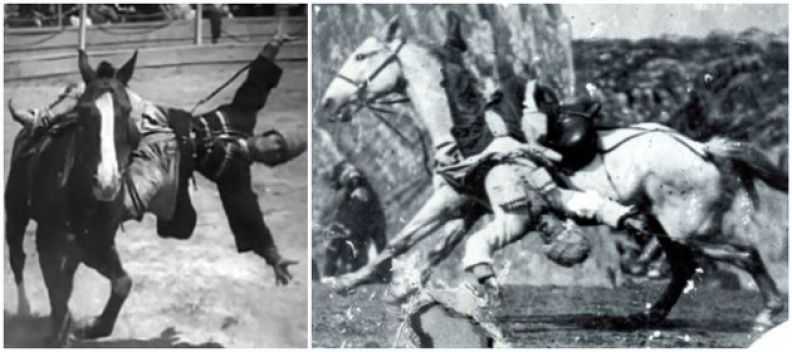
The story of their arrival in the West is fascinating. Recruited by Thomas Oliver for circus performances in the United States, these riders, often referred to as “Russian Cossacks,”( associated with skilled horsemen from the Russian Empire, which at that time included Georgia). adapted to American horses and showcased their unique skills with traditional Georgian saddles and equipment. Their impact on American rodeo culture was significant, introducing trick riding techniques that shaped the rodeo’s visual and performance elements.

The Legend of Amirani
Amirani, often likened to the Greek Prometheus, is a mythical hero whose stories are laced with themes of resistance, bravery, and the quest for enlightenment. According to legend, Amirani defied the gods to bring knowledge and tools to humanity, a feat that led to his eternal punishment. Unlike Prometheus, who is bound alone, Amirani’s fate is deeply entwined with that of his faithful dog and a divine horse, both of whom suffer alongside him, reflecting the Georgian ethos of loyalty and the profound bond between humans and animals.
In some versions of the tale, it is said that Amirani was born to a human mother and a god, granting him extraordinary strength and a destiny to challenge the heavens. His association with divine horses symbolizes not only his supernatural origins but also his mastery over the natural and the divine realms. These horses, often depicted as possessing extraordinary abilities such as flight or the power to speak, serve as Amirani’s companions and allies, highlighting the revered status of horses within Georgian mythology.
Symbolic Meanings
In Georgian folklore, horses symbolize several key attributes, including strength, freedom, and the pursuit of glory. The horse’s role as Amirani’s companion underscores the animal’s significance as a bridge between the earthly and the divine, capable of traversing realms and facing the gods themselves. This relationship between hero and horse in Georgian mythology reflects broader cultural values, emphasizing the importance of courage, loyalty, and the struggle against adversity.
Furthermore, the divine horses in Georgian legends are often seen as protectors and guides, embodying the noble qualities that Georgians aspire to. Their presence in these tales serves as a reminder of the harmonious coexistence with nature and the respect for the animal kingdom, which has been a cornerstone of Georgian culture throughout the ages.
Influence on Georgian Cultural Values
The stories of Amirani and his divine horses have left a lasting imprint on Georgian cultural values, influencing perceptions of heroism, the natural world, and the virtues of bravery and loyalty. These myths reinforce the idea that true strength lies in the ability to challenge the status quo, to seek greater knowledge, and to stand firm in the face of insurmountable odds. They celebrate the indomitable spirit of the Georgian people, as well as their deep connection to and reverence for horses.
The enduring popularity of these legends, passed down through generations, continues to inspire contemporary Georgian society. They serve not only as tales of adventure and defiance but also as moral compasses, guiding listeners and readers toward a life of courage, respect for the natural world, and unyielding loyalty to companions, be they human or animal.
Cultural Significance
Symbolism and Social Status
The horse has long been a symbol of prestige, power, and freedom in Georgian culture, reflecting not only the animal’s utility but its integral role in the social and symbolic fabric of the country. This section explores the dual significance of horses in Georgian society: as emblems of cultural identity and markers of social status.

Emblem of Cultural Identity
In Georgia, the horse transcends its role as a mere animal to become a potent symbol of the nation’s spirit and heritage. Historically, horses have been intertwined with Georgian identity, representing the qualities most cherished by its people: bravery, freedom, and the strength to endure the challenges posed by nature and history.
- Folklore and Mythology: The prominence of horses in Georgian folklore and mythology underscores their symbolic significance. Legends abound of heroic figures and their loyal steeds, often granted magical abilities to protect and serve their masters. These tales reflect the societal ideal of the horse as a noble and fearless companion, embodying the virtues of courage and loyalty.
- Art and Literature: Georgian art and literature are replete with references to horses, symbolizing various aspects of life, from the struggle for independence to the beauty of the Georgian landscape. In poetry and prose, horses often represent the unbreakable bond between the land and its people, a source of inspiration and pride.
Marker of Social Status
Beyond their symbolic value, horses have historically been markers of social status in Georgian society. Ownership of horses, especially fine breeds, was a privilege reserved for the nobility and warrior class, signifying wealth, power, and prestige.
- Nobility and Cavalry: In the feudal structure of medieval Georgia, the aristocracy and cavalrymen were often distinguished by their possession of horses. The ability to maintain a stable of fine horses was not only a sign of material wealth but also a requirement for military service among the nobility, reinforcing the social hierarchy.
- Rituals and Ceremonies: Horses played a central role in Georgian rituals and ceremonies, from weddings to religious festivals. The inclusion of horses in these events was not only practical but symbolic, enhancing the social standing of the participants. For example, a groom’s procession on horseback was a display of his family’s status and the respect afforded to them within the community.
- Modern Reinterpretations: In contemporary Georgia, while the direct link between horse ownership and social status has evolved, the prestige associated with equestrian sports and horse breeding maintains echoes of the past. Engaging in equestrian activities or owning horses is often associated with social prestige and reflects a continuation of the traditional valuation of horses as status symbols.
Traditional Equestrian Events
In the heart of Georgia’s vibrant culture, traditional equestrian events stand as a testament to the country’s rich history and the enduring relationship between man and horse. These events, often steeped in centuries-old traditions, are not merely competitions but are deeply embedded in the social fabric of Georgian communities, serving as a means of strengthening bonds, preserving cultural identity, and celebrating the nation’s equestrian heritage.
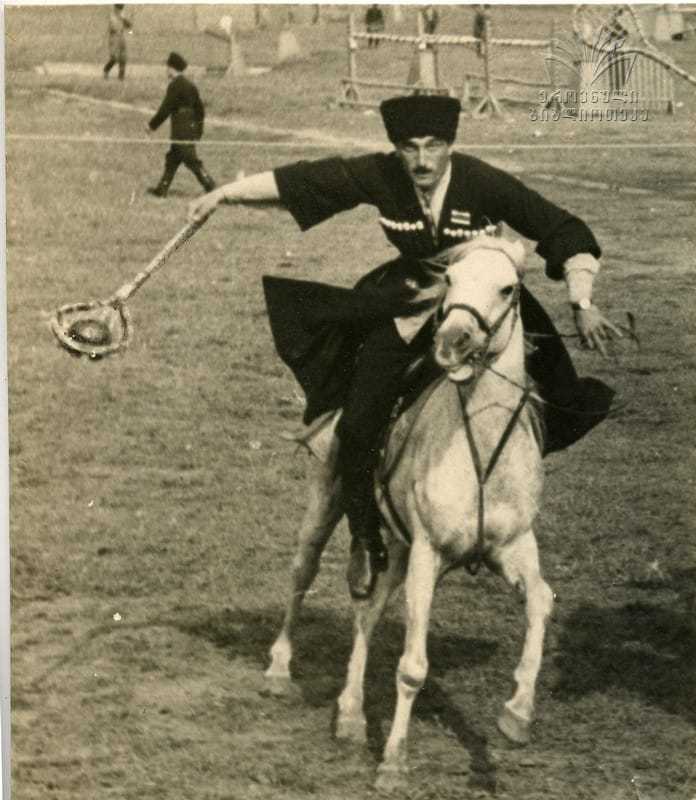
Lelo Burti
One of the most iconic traditional Georgian equestrian games is Lelo Burti, often simply referred to as Lelo. It is a physically demanding and spirited game that resembles a mix between rugby and a mass melee, where a heavy ball is carried to a specific location, such as a river or a village boundary, to score points. Although not always played on horseback, when it is, the game takes on an added dimension of complexity and skill. Horse-mounted players add speed and agility to the game, showcasing their riding prowess as they maneuver through the field of players on foot, aiming to deliver the ball to its target. The game is deeply symbolic, often played during Easter celebrations, and is believed to bring peace and prosperity to the community.
Buzkashi
Although more commonly associated with Central Asian cultures, Buzkashi has its variants in Georgian mountain regions, where it is known by different names. The game involves horse-mounted players attempting to grab and control a goat or calf carcass, aiming to drop it within a designated area. It is a test of strength, horsemanship, and strategy, reflecting the pastoral and warrior traditions of the Georgian highlanders. The game serves as a living connection to Georgia’s nomadic and martial past, highlighting the skills that were essential for survival and success in the historical context.
Horse Races and Show Competitions
Horse racing is another traditional equestrian event with a long history in Georgia. Unlike the flat races common in the West, Georgian horse races often take place over varied terrain, including steep mountain paths, reflecting the natural landscapes of the country. These races are not only a display of speed but also of endurance and the deep connection between the rider and their horse, as they navigate challenging courses together.
Show competitions, though less traditional, have become an important part of contemporary equestrian events in Georgia. These competitions often include dressage, show jumping, and other disciplines that showcase the training, agility, and beauty of Georgian horses and the skill of their riders. They serve as a platform for celebrating and preserving the country’s equestrian arts, attracting participants and spectators from across Georgia and beyond.
Cultural and Social Significance
These traditional equestrian events are more than mere sports; they are vital expressions of Georgian culture and heritage. They foster community spirit, bringing together participants and spectators in celebrations that transcend the competitive aspects of the games. The preparation for these events, often involving the entire community, and the festivities that accompany them, including music, dance, and feasting, strengthen communal bonds and reinforce a sense of identity and continuity.
Furthermore, these events play a crucial role in preserving Georgia’s equestrian traditions, passing down skills and knowledge from generation to generation. They serve as a living museum of Georgian horsemanship, offering insights into the historical and cultural significance of horses in Georgian society.
Modern Practices
The Contemporary Scene
Today, Georgia’s equestrian scene is a blend of tradition and modernity, with a growing interest in both leisure riding and competitive equestrian sports. Horse riding clubs and schools have proliferated across the country, offering training in show jumping, dressage, and eventing, alongside traditional Georgian riding styles. These institutions not only serve to promote horse riding as a sport but also as a means of connecting with the country’s cultural heritage.
Local riders, many of whom come from generations of horsemen, share a deep connection with their animals, viewing them as partners rather than mere participants in sport or recreation. “The bond between a rider and a horse is built on trust and mutual respect,” says one seasoned trainer from the region of Kakheti, known for its equestrian traditions. “It’s about understanding the horse, its needs, and its signals. That’s something that hasn’t changed, even with modern training methods.”
Opportunities
The equestrian community in Georgia is optimistic about the future. The resurgence of interest in native horse breeds, such as the Georgian Mountain Horse, known for its endurance and adaptability, presents an opportunity for preserving the country’s equestrian heritage. Conservation efforts and breeding programs aimed at these breeds are gaining traction, with support from both the government and private sectors.
Moreover, the increasing popularity of horse riding among tourists offers a new avenue for the growth of the equestrian sector. Equestrian tourism, including trail riding through Georgia’s stunning landscapes and participation in traditional horse games and festivals, has the potential to bring international attention to Georgian horse riding culture, while also providing a sustainable source of income for local communities.
Genetic Characteristics and Adaptations
Georgian horse breeds, such as the Georgian Mountain Horse, are distinguished by their genetic adaptations to the local environment. These adaptations include a robust constitution, capable of withstanding the harsh mountainous climate, and a sure-footedness that is essential for navigating the challenging terrain of the Caucasus. These horses are typically smaller in stature, a trait that enhances their endurance and agility, making them well-suited to the varied Georgian landscape.
The genetic diversity within Georgian horse breeds is a valuable resource, offering insights into the evolutionary processes that have shaped equine species in response to environmental pressures. This diversity also holds potential for improving the genetic resilience of domesticated horse populations worldwide, contributing to global efforts to maintain healthy and adaptable equine breeds.
Significance to Global Biodiversity
The conservation and breeding of Georgian horse breeds are not merely a matter of national pride but also contribute to the global effort to preserve biodiversity. Each breed represents a unique set of genetic resources, evolved over centuries to adapt to specific environmental conditions. The loss of these breeds would mean not only the erosion of Georgia’s cultural heritage but also a reduction in the global pool of genetic diversity, which is crucial for the adaptability and resilience of species in the face of changing environments and emerging diseases.
Influence on Social Structures
In Georgia, horse riding has historically been a marker of social status and prestige. Ownership and mastery of horse riding were once privileges of the nobility and warrior classes, symbolizing power, wealth, and honor. While modern society has moved beyond feudal structures, the respect for skilled riders and horse owners remains in many cultures. Equestrian events, particularly in rural areas, serve as social gatherings where community ties are strengthened, traditions are celebrated, and local heroes are made.

The changing dynamics of rural and urban life in Georgia impact the accessibility and popularity of horse riding. Urbanization poses challenges for maintaining traditional equestrian spaces, yet it also opens up new avenues for introducing horse riding to urban dwellers through city-based clubs and events. Bridging the gap between rural traditions and urban lifestyles is essential for the continued relevance and growth of horse riding in Georgia.
In conclusion, the horse riding culture of Georgia offers an enriching and educational experience for tourists and guests, inviting you to embark on a journey that is as much about discovering the beauty of the landscape as it is about connecting with the spirit of Georgia. It is a tradition that deserves to be celebrated, preserved, and shared, not only as a testament to Georgia’s rich cultural heritage but also as an enduring symbol of the country’s resilience and beauty. As you ride through the vast expanses of Georgia, remember that you are part of a timeless narrative—a celebration of the bond between humans and horses that transcends boundaries and unites us in our shared history and aspirations.