

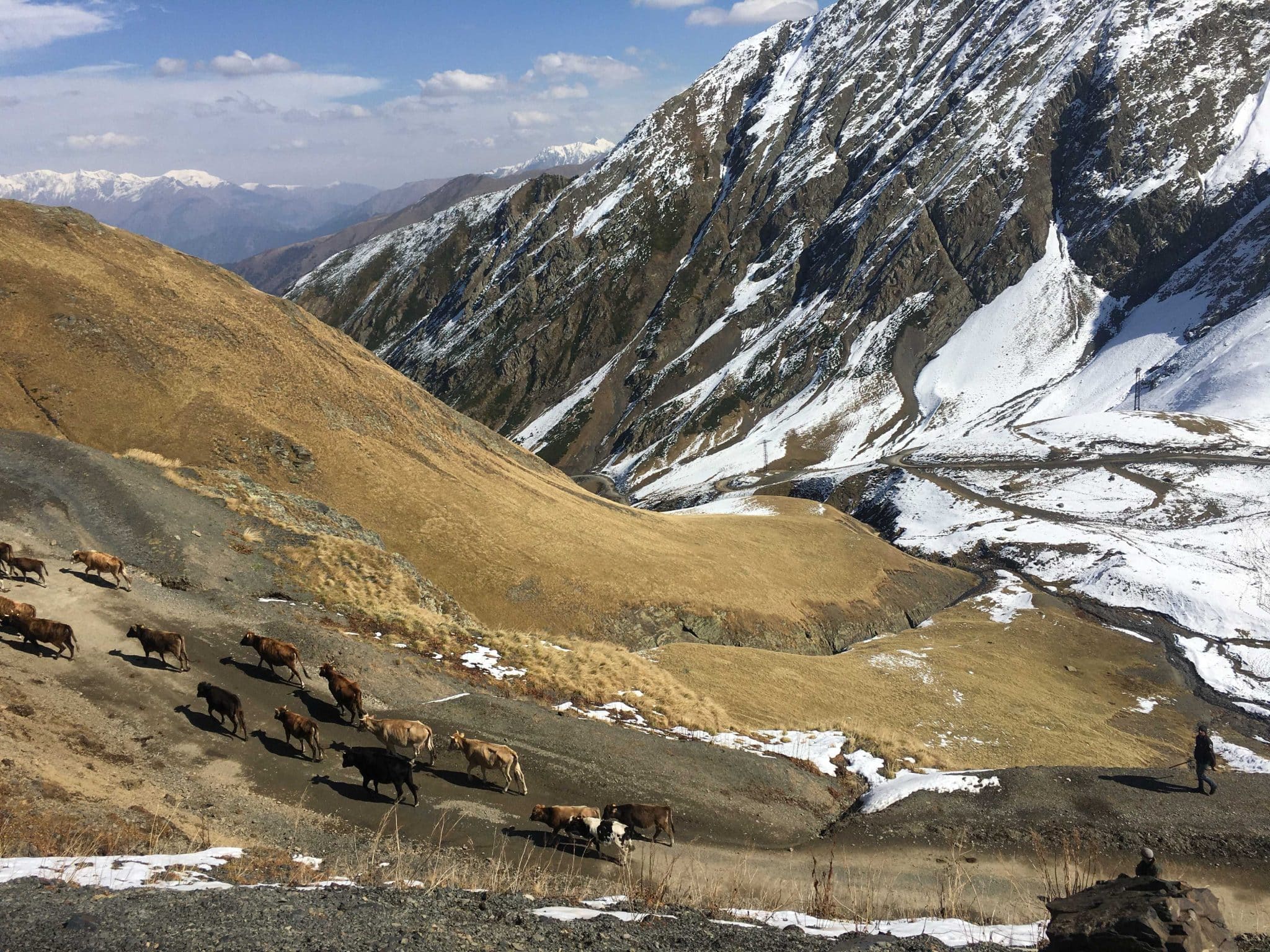
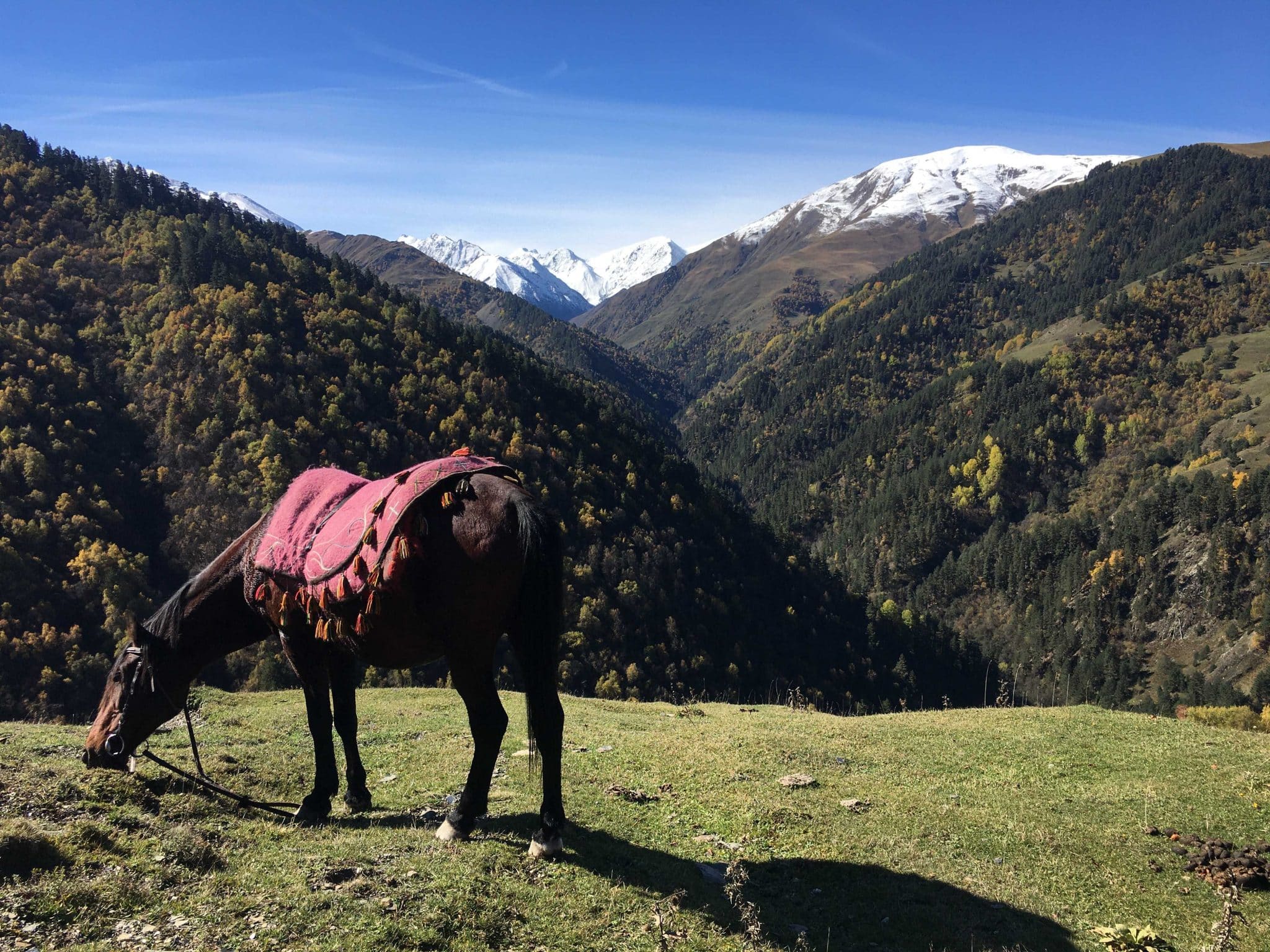
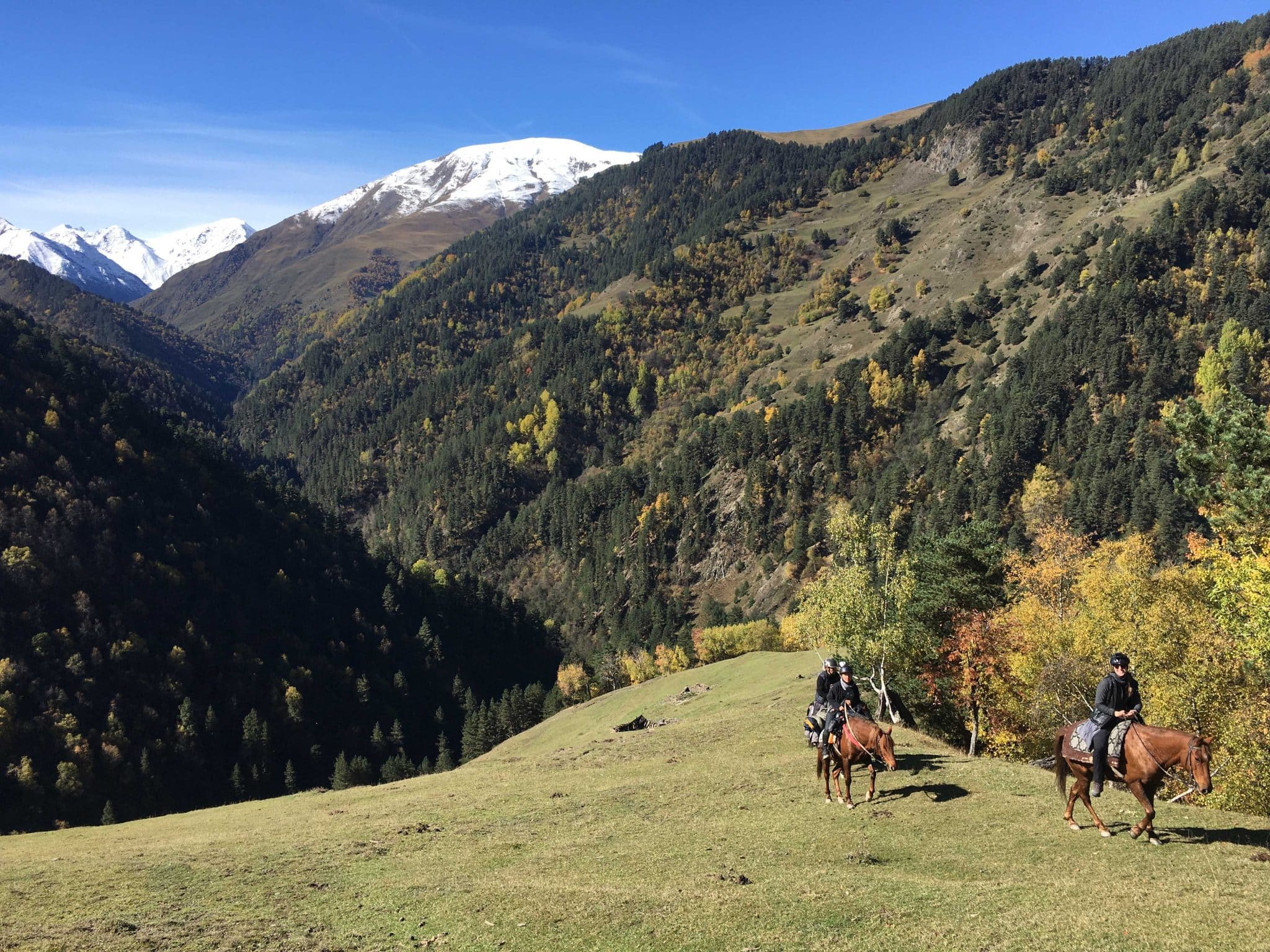
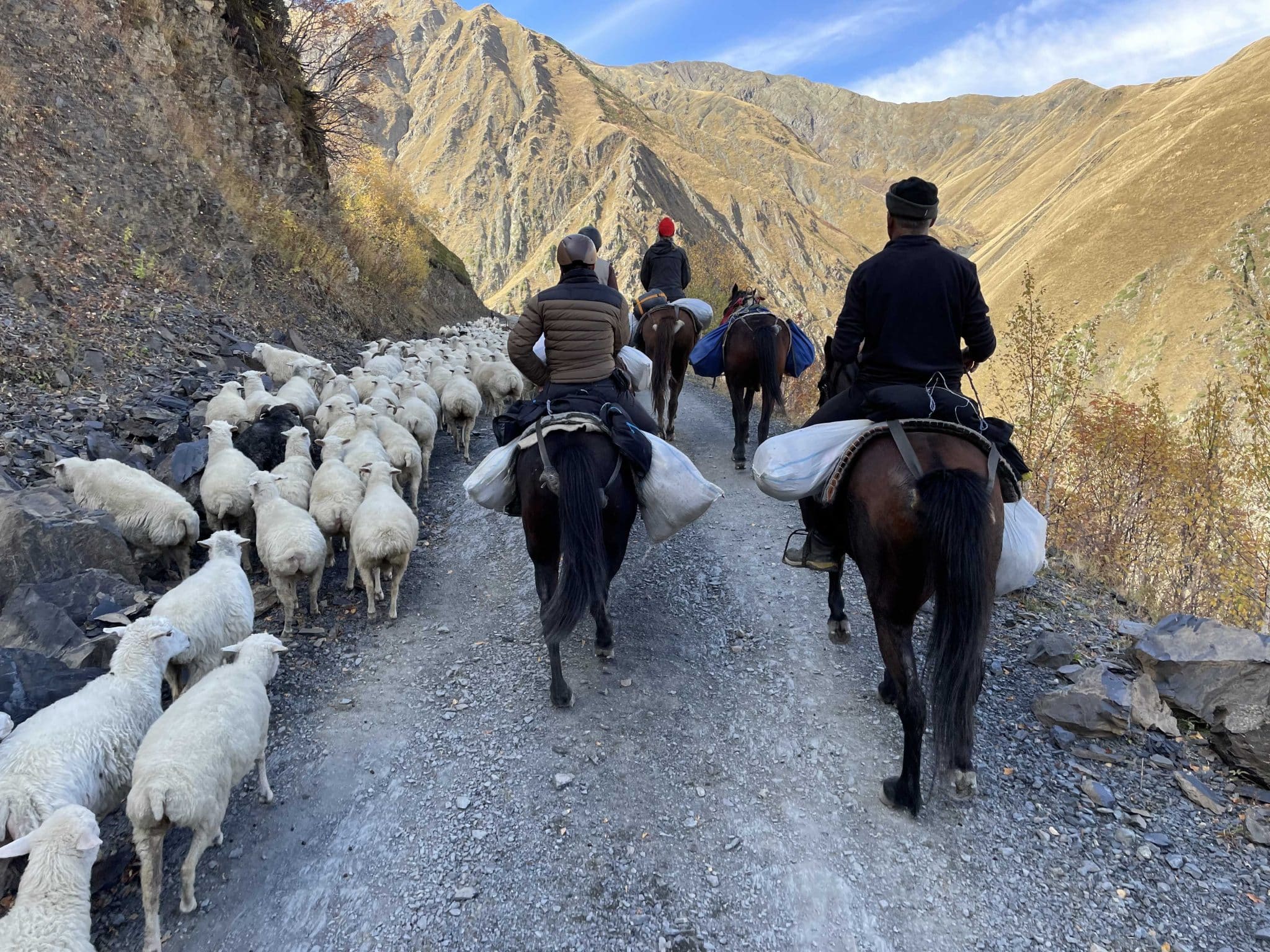
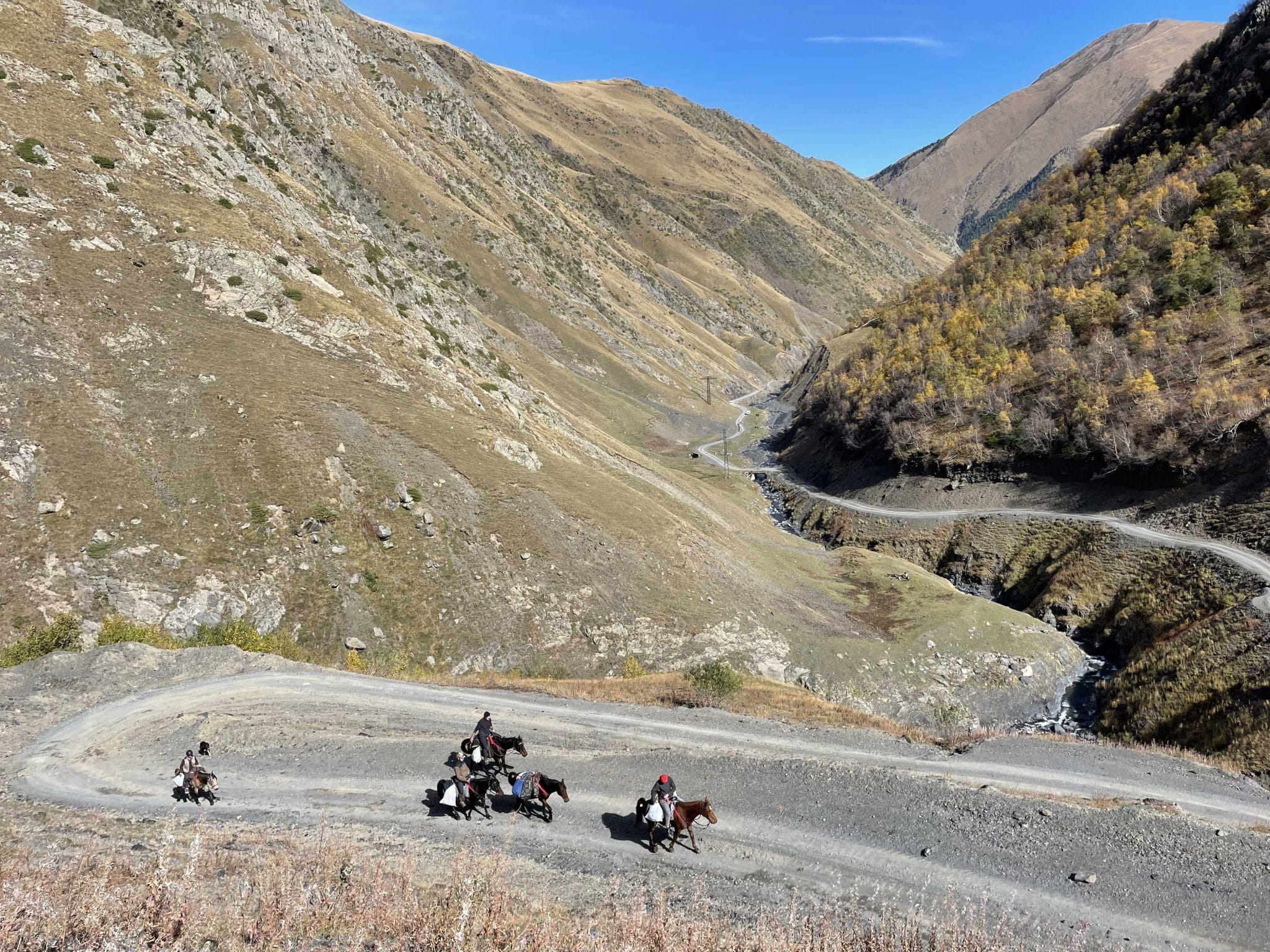
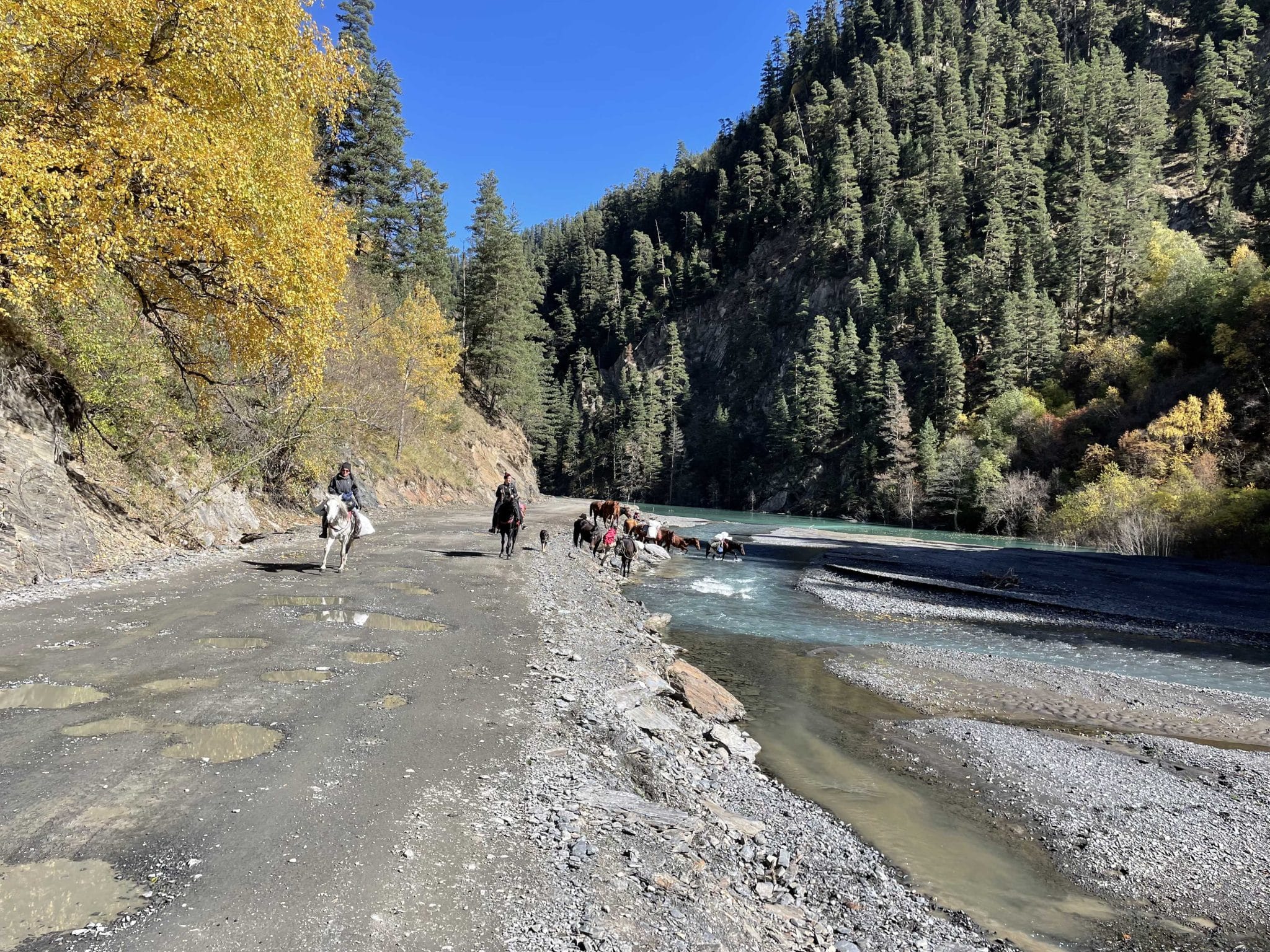
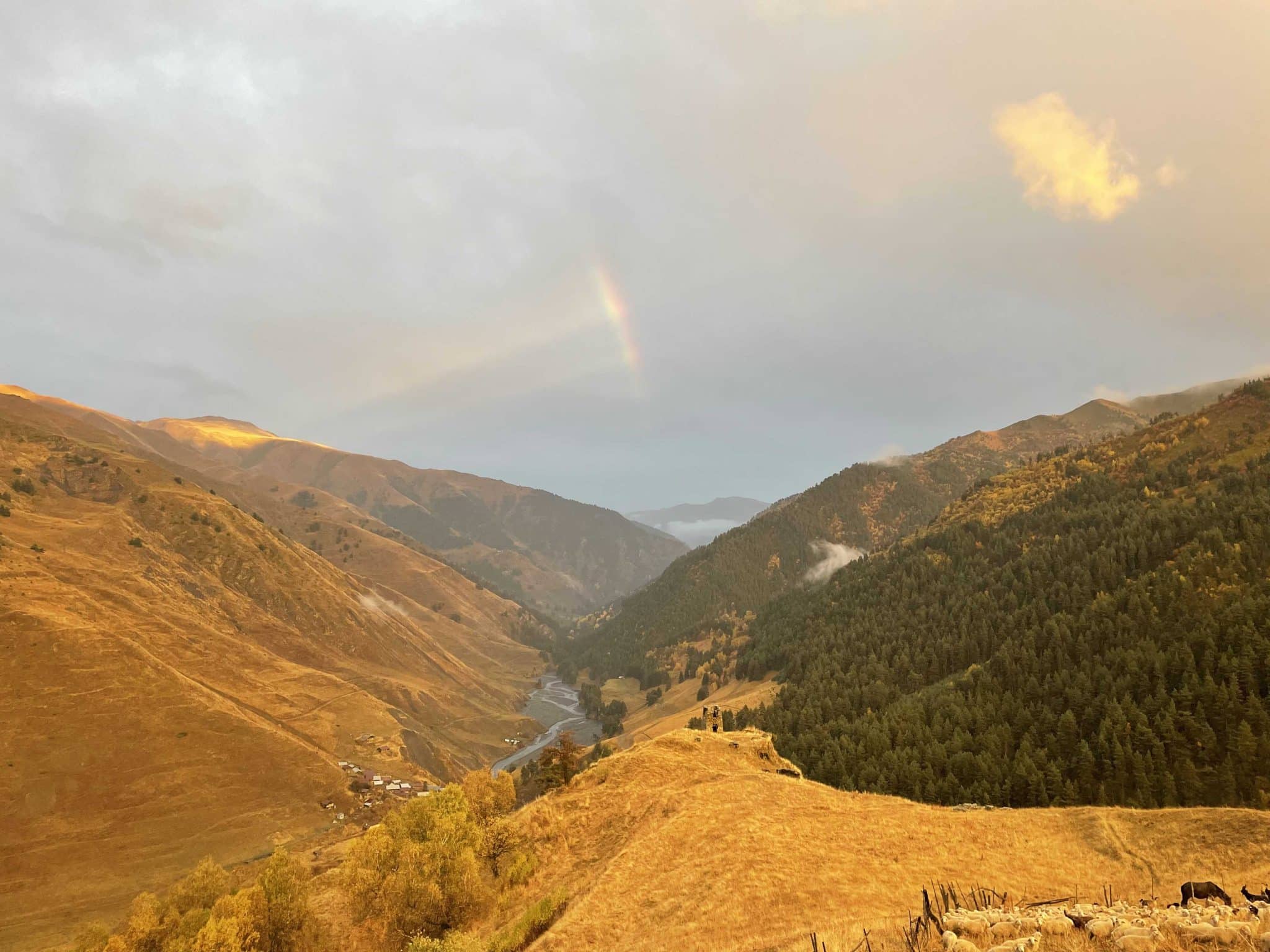
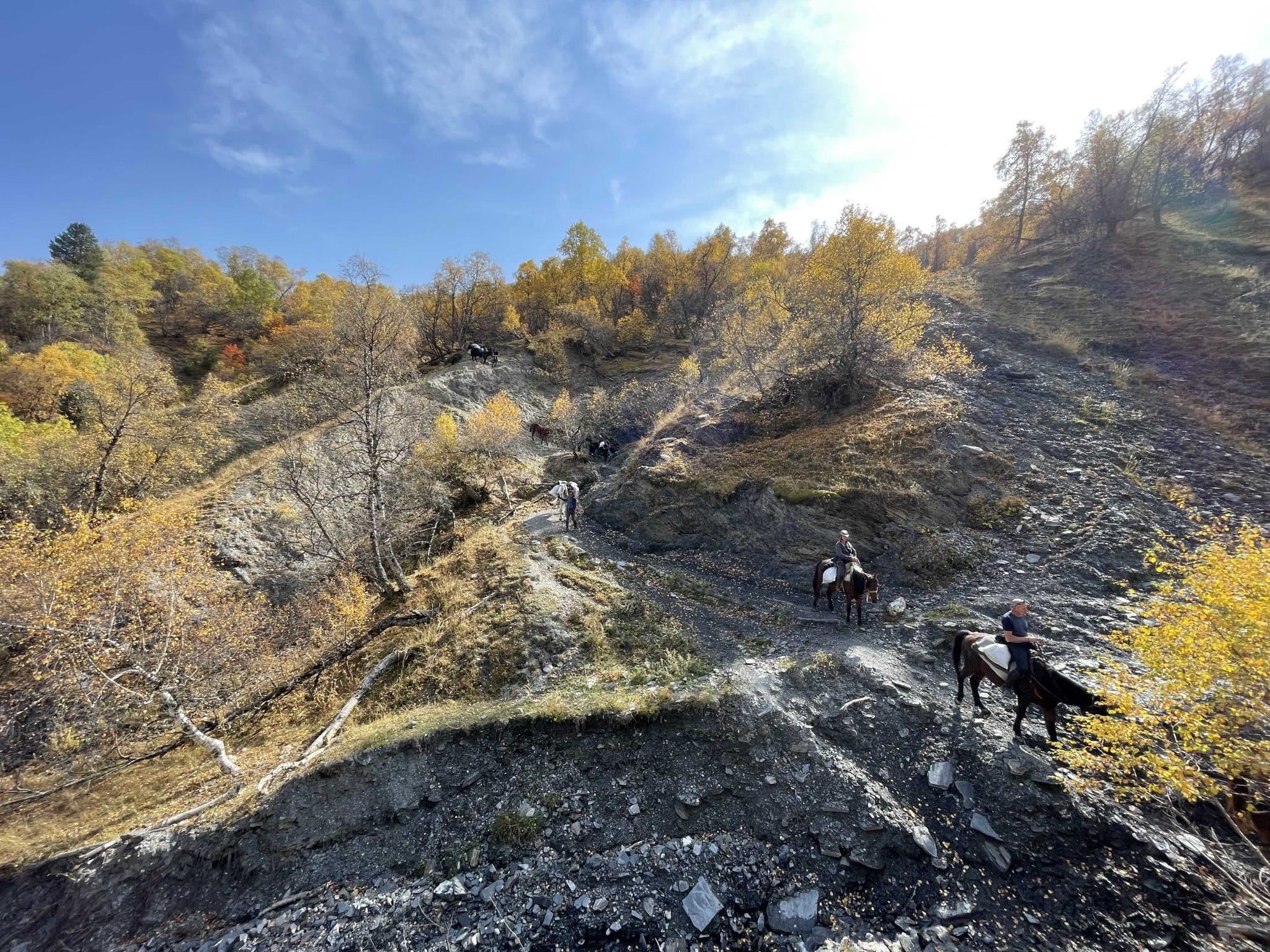
As the colder months approach, the transhumance begins — a descent from Tusheti’s remote highlands to the lowlands of Kakheti, dictated by weather, terrain, and the movement of the herd.
This 13-day expedition follows the ancient seasonal migration of Tushetian horses and riders.
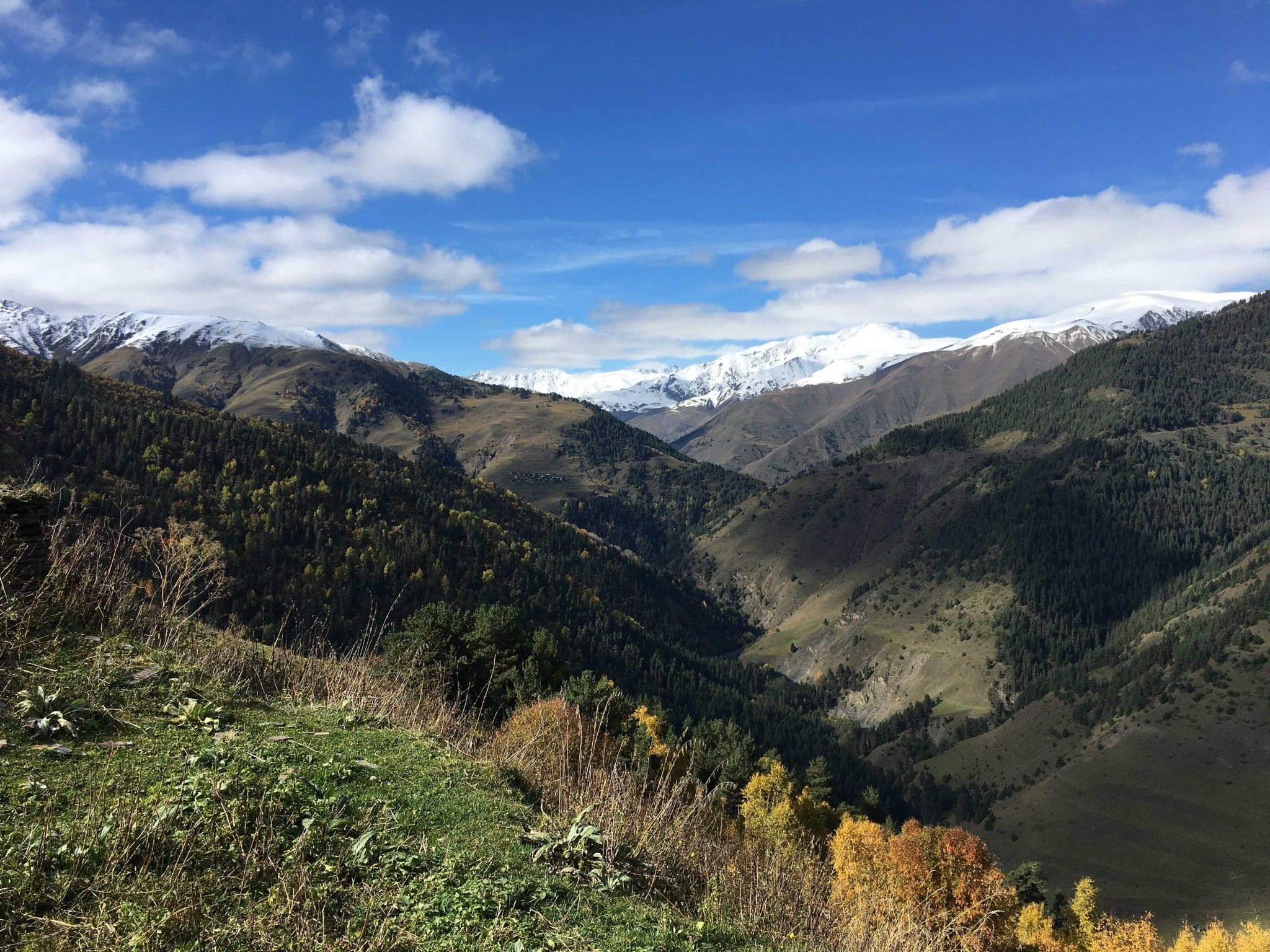
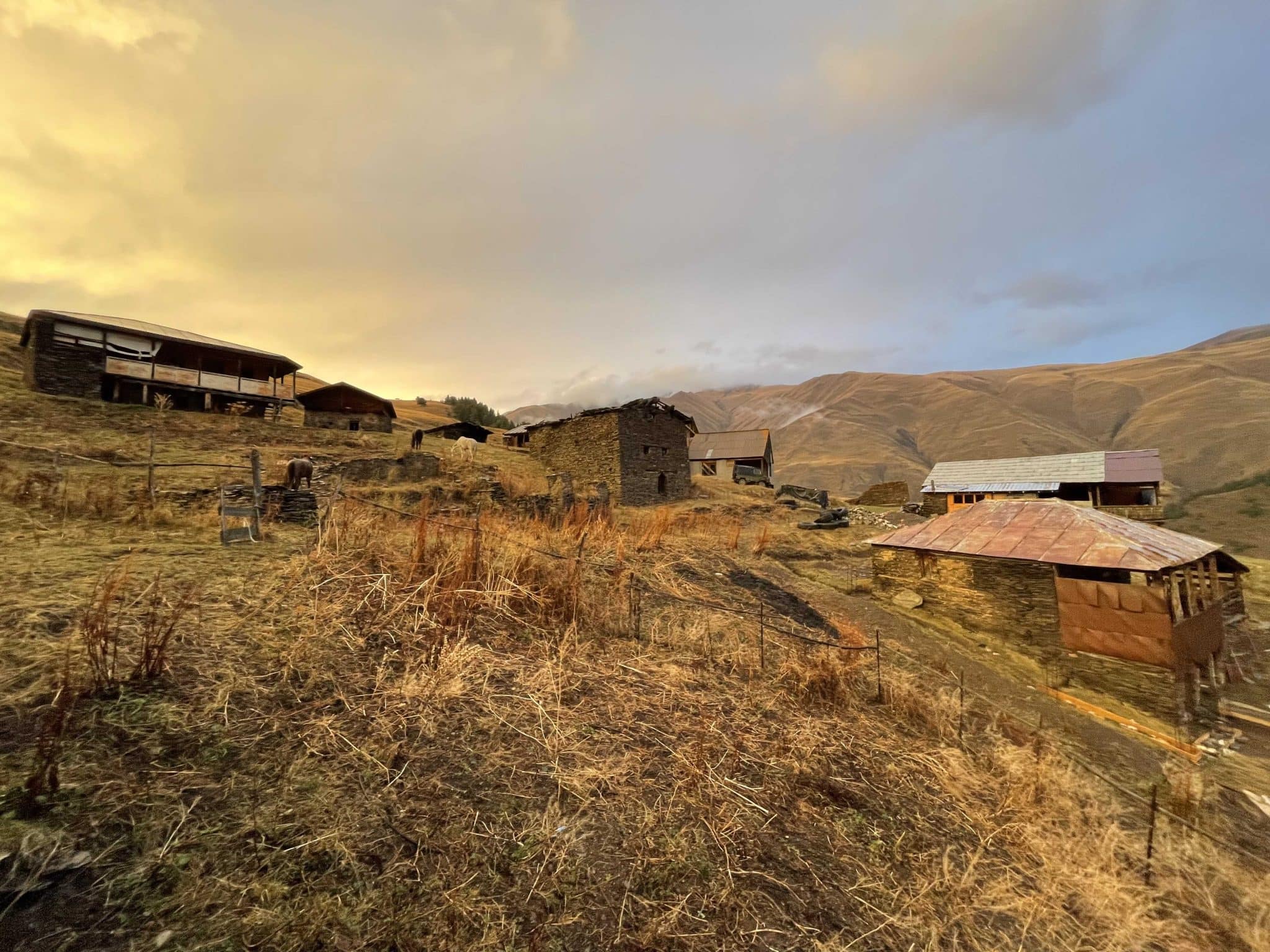
The journey begins in Tbilisi, passing through the vineyards and sacred sites of Kakheti before climbing the Abano Pass (2,926m) — the highest drivable road in the Caucasus — into Tusheti’s high-altitude villages, where stone towers and pagan shrines mark centuries-old settlements.
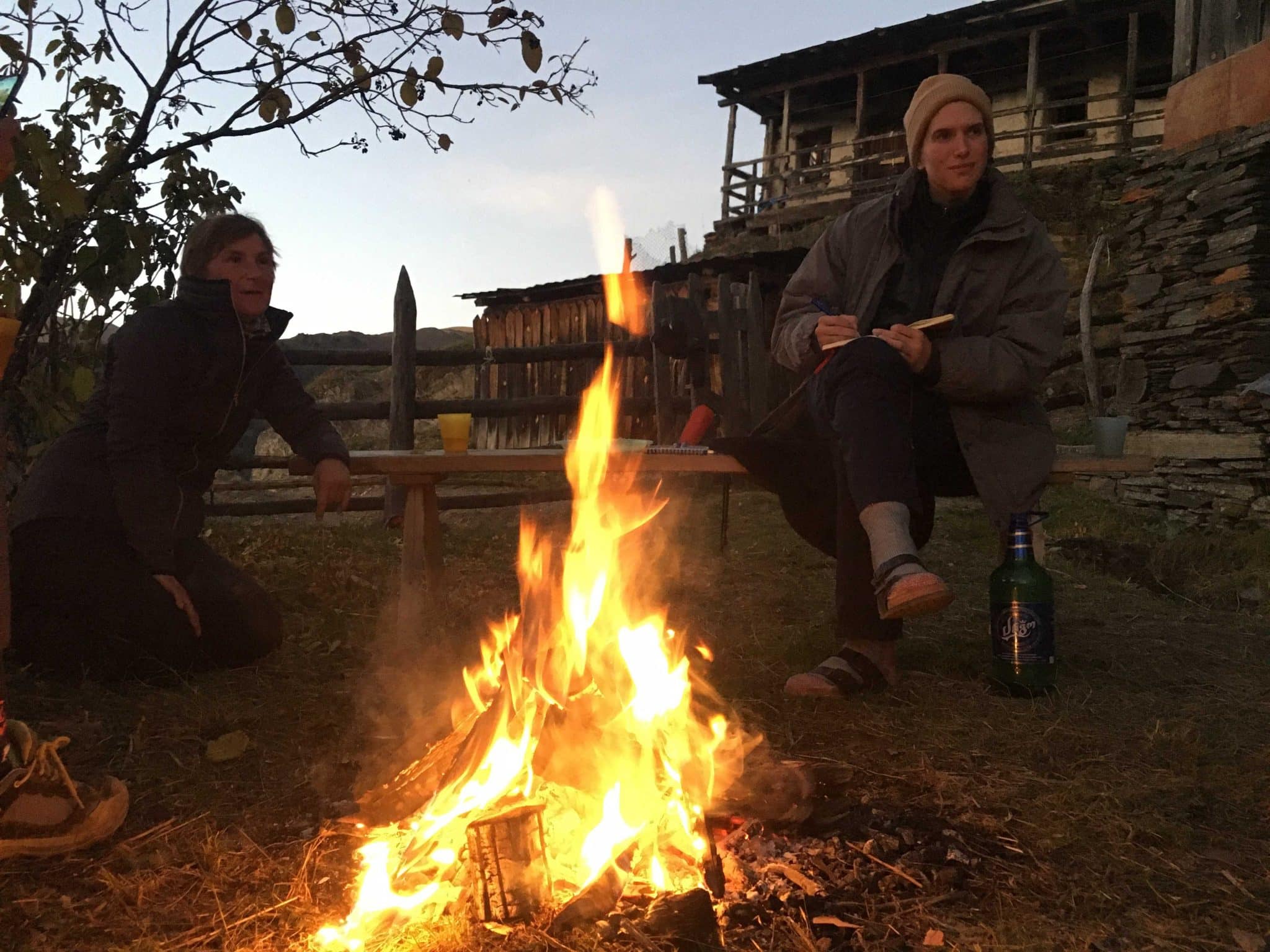
In the first days, riders move between Gogrulta, Koklata, and Diklo — villages where the Tush people have long lived with their horses, adapting to the rugged, silent rhythm of the mountains. Riders stay in traditional houses with no electricity or running water, sleeping as past generations did — in rooms warmed only by wood stoves.
Then comes the descent.
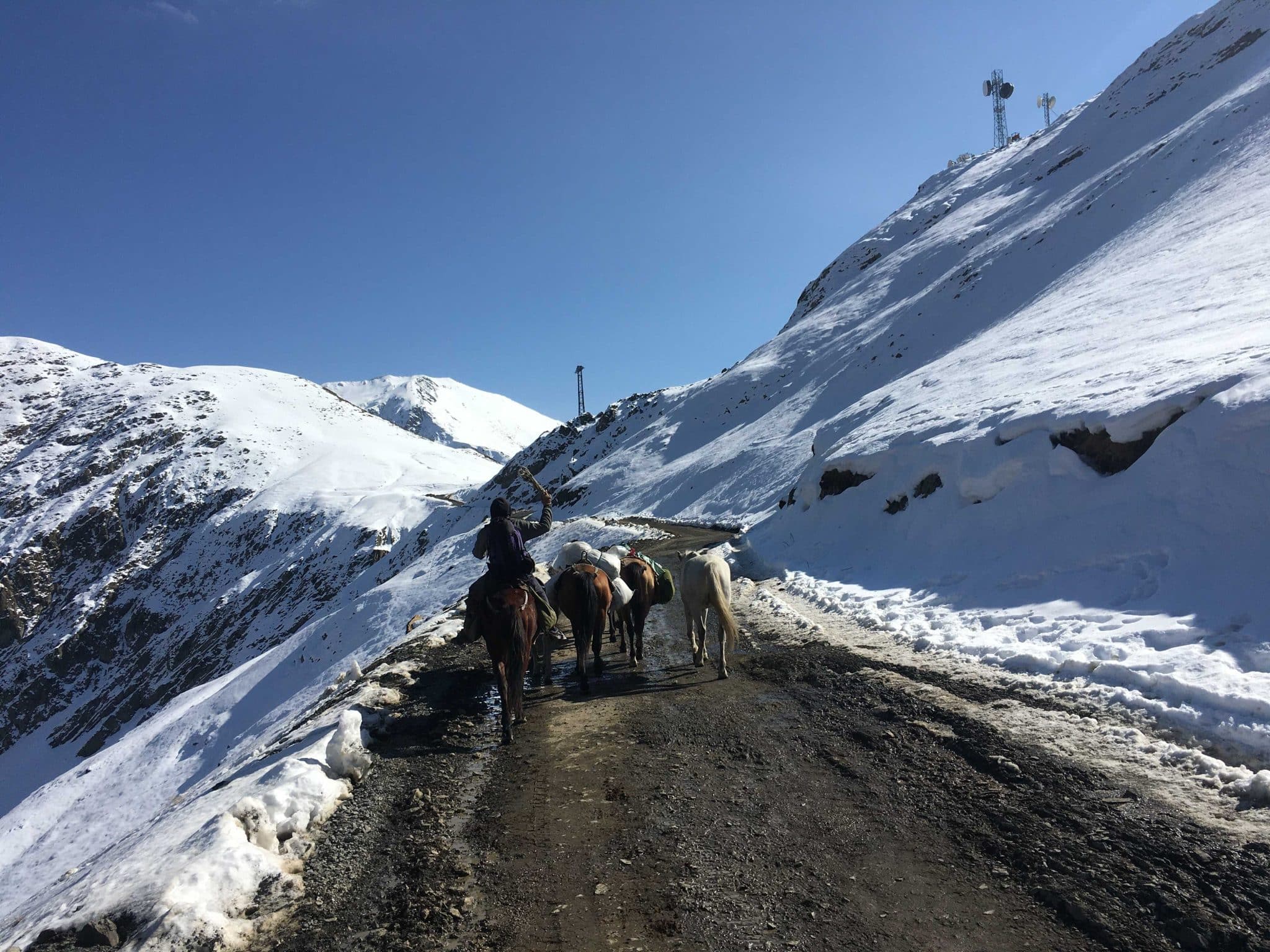
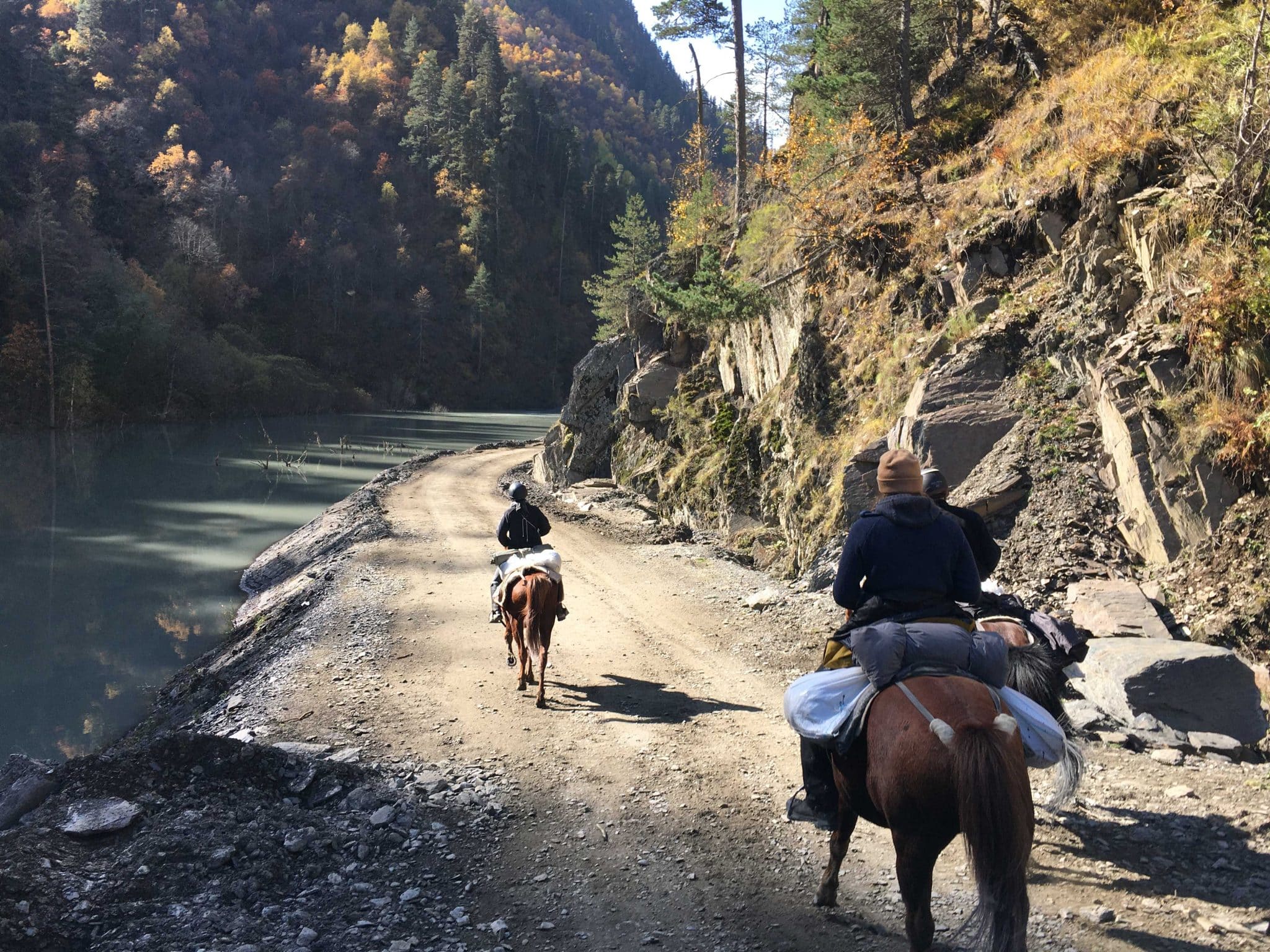
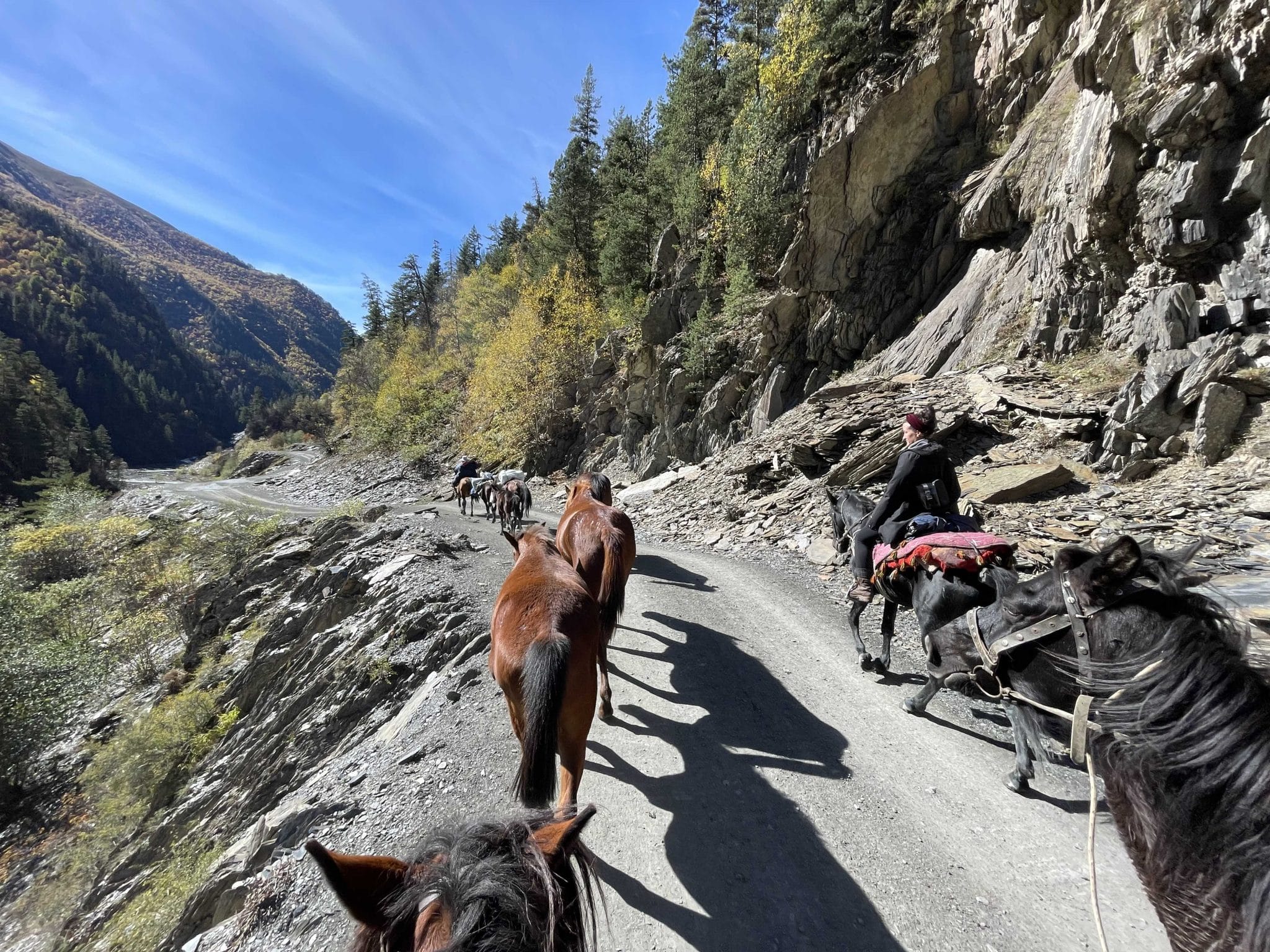
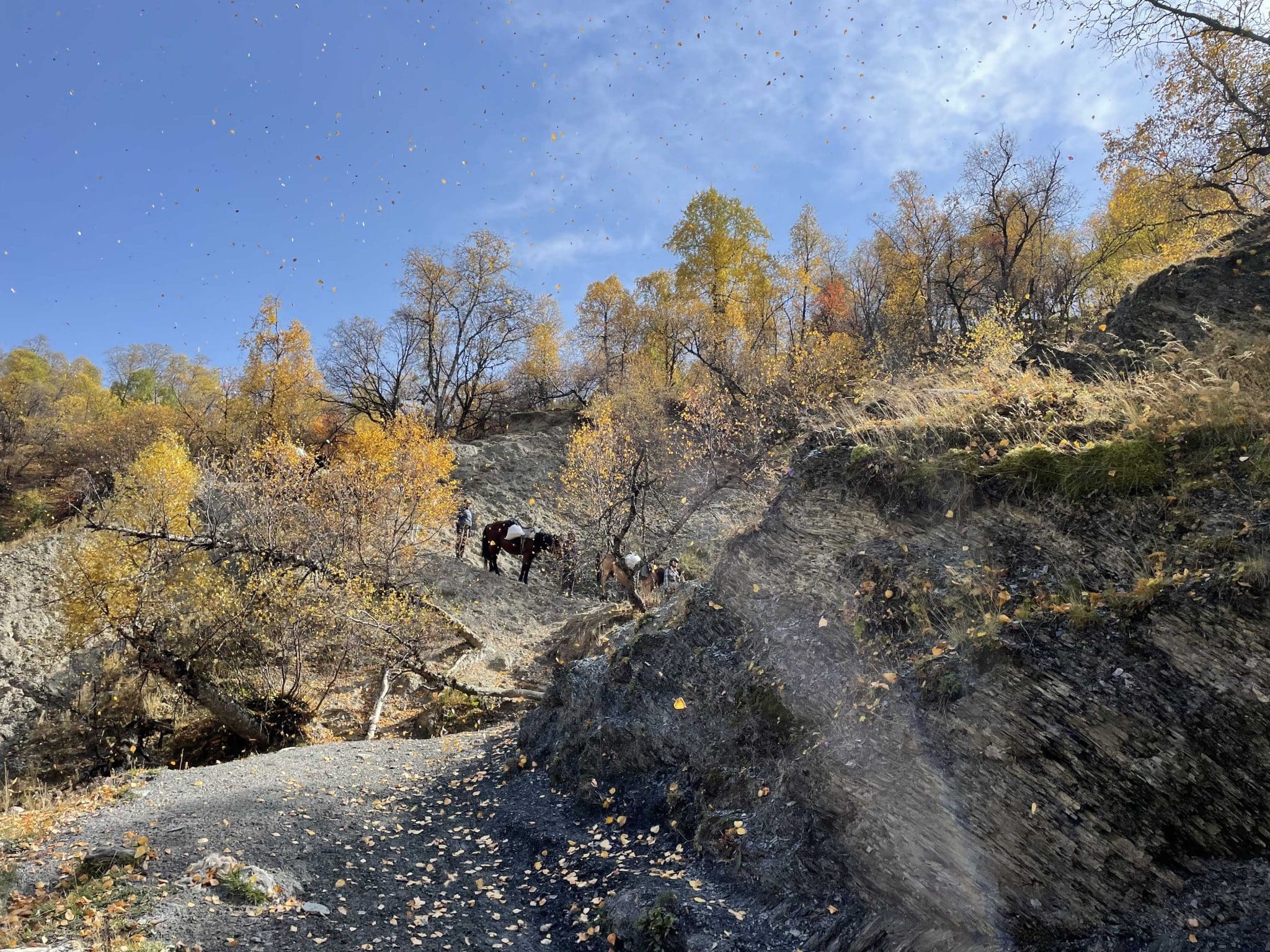
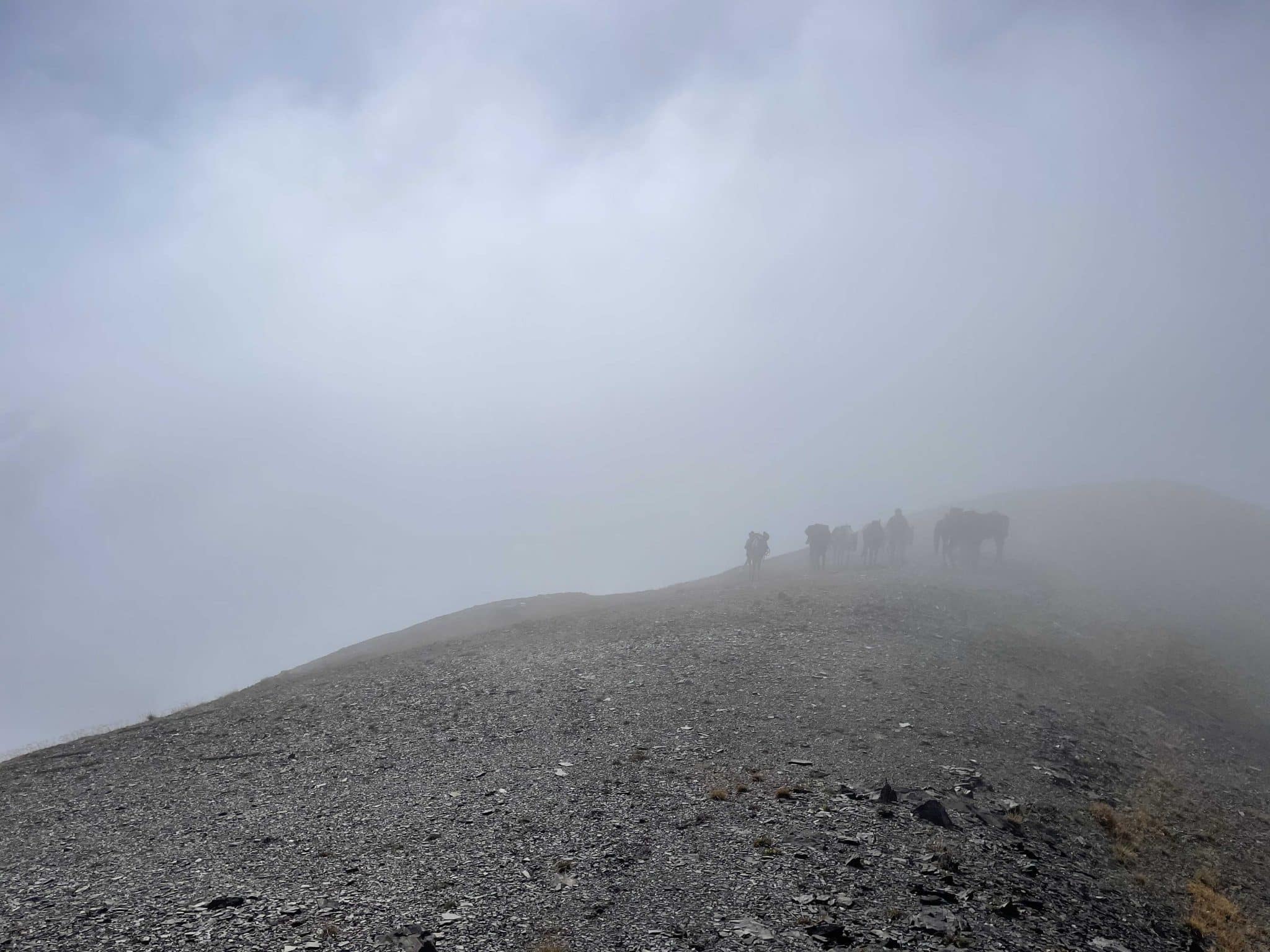
On transhumance days, riders may spend up to 13 hours in the saddle, covering vast terrain through shifting autumn landscapes — crossing mountain passes, enduring snow, rain, or wind, with no access to hot meals or modern comforts. Nights are spent wherever the path allows — in tents or simple shelters.
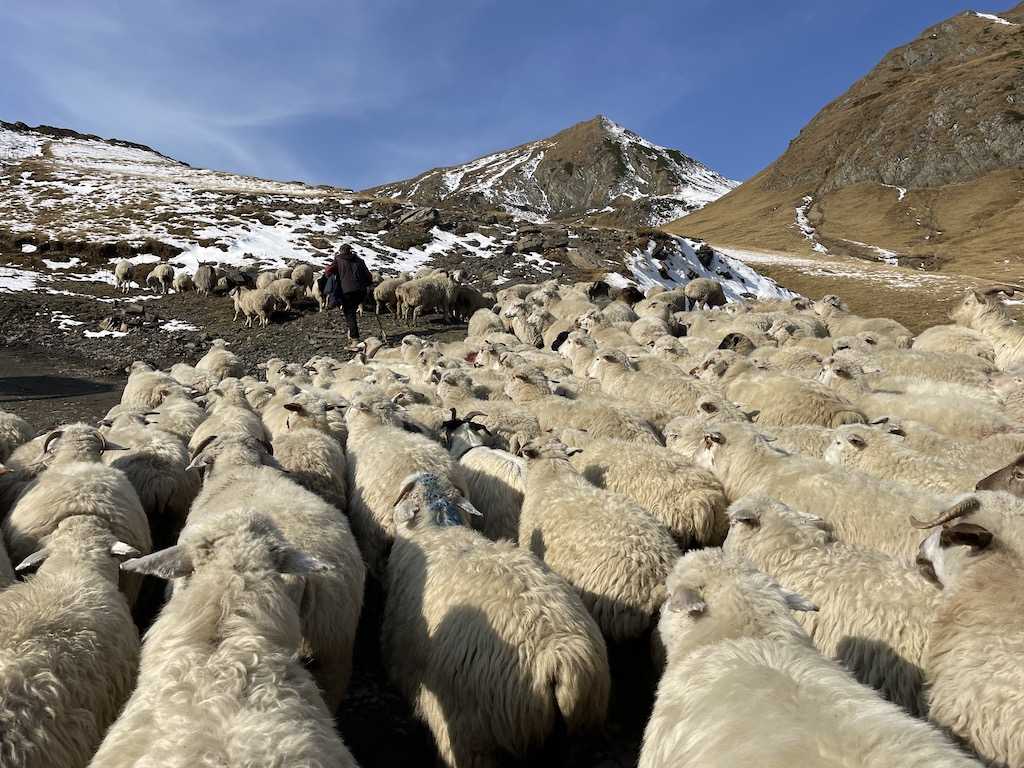
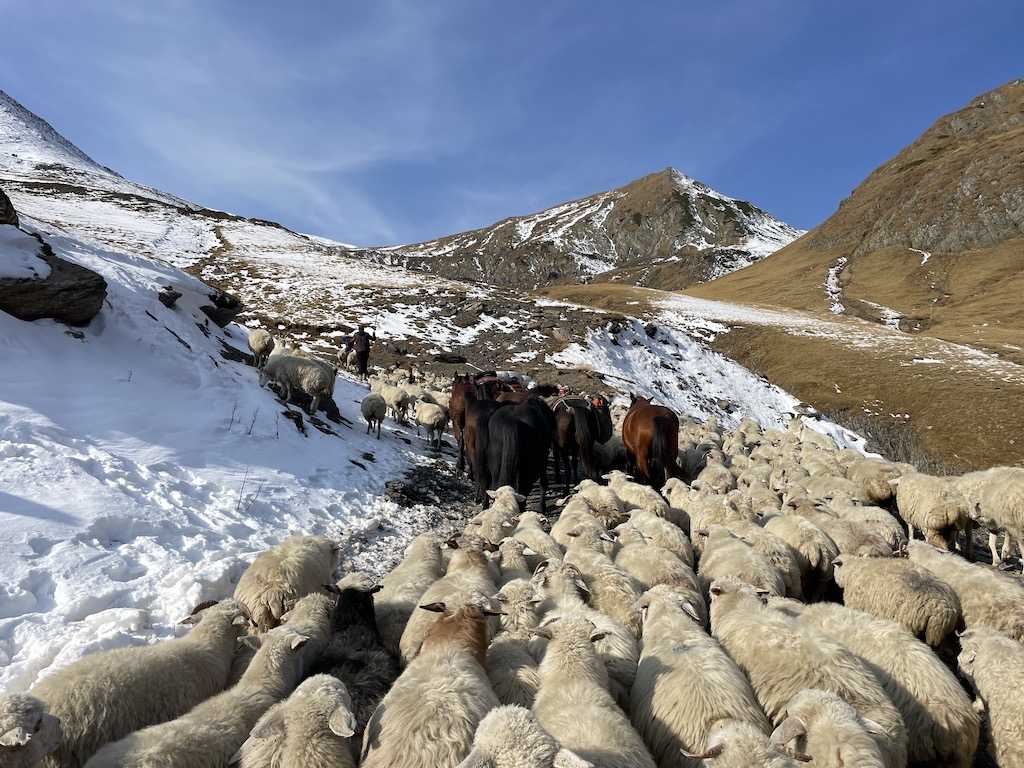
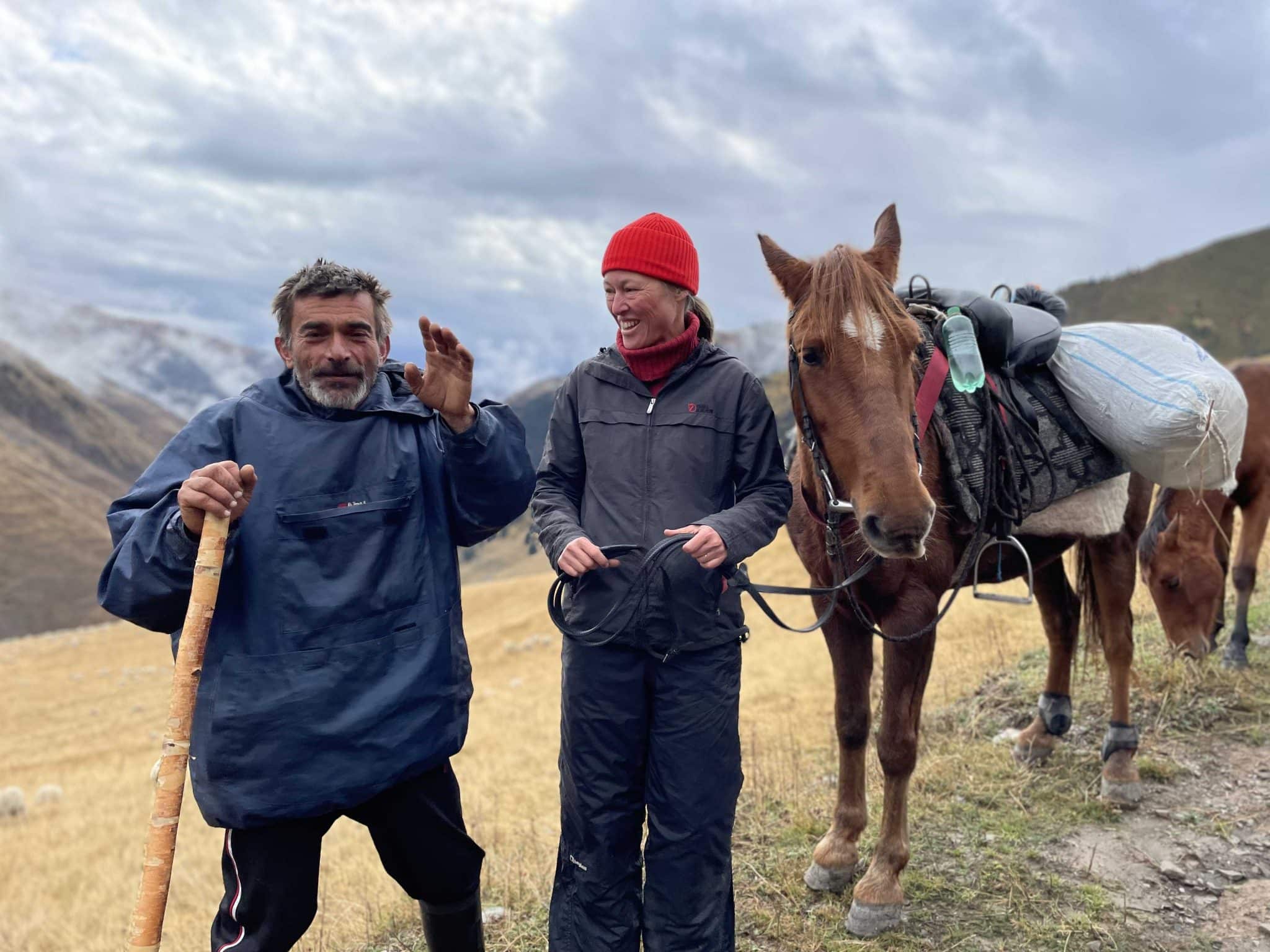
This journey follows the logic of the land. There is no fixed schedule — only the urgency to reach lower ground before winter sets in. Riders take part in the work of moving the herd, always putting the horses’ needs before their own.
Demanding, raw, and rare, this is not a tour — it’s a passage.
The expedition ends in Tbilisi, where warmth, food, and reflection offer contrast to the cold clarity of the trail.
Those who join this journey will not only ride through the mountains — they will become part of their story.
Tbilisi International Airport
Samples:
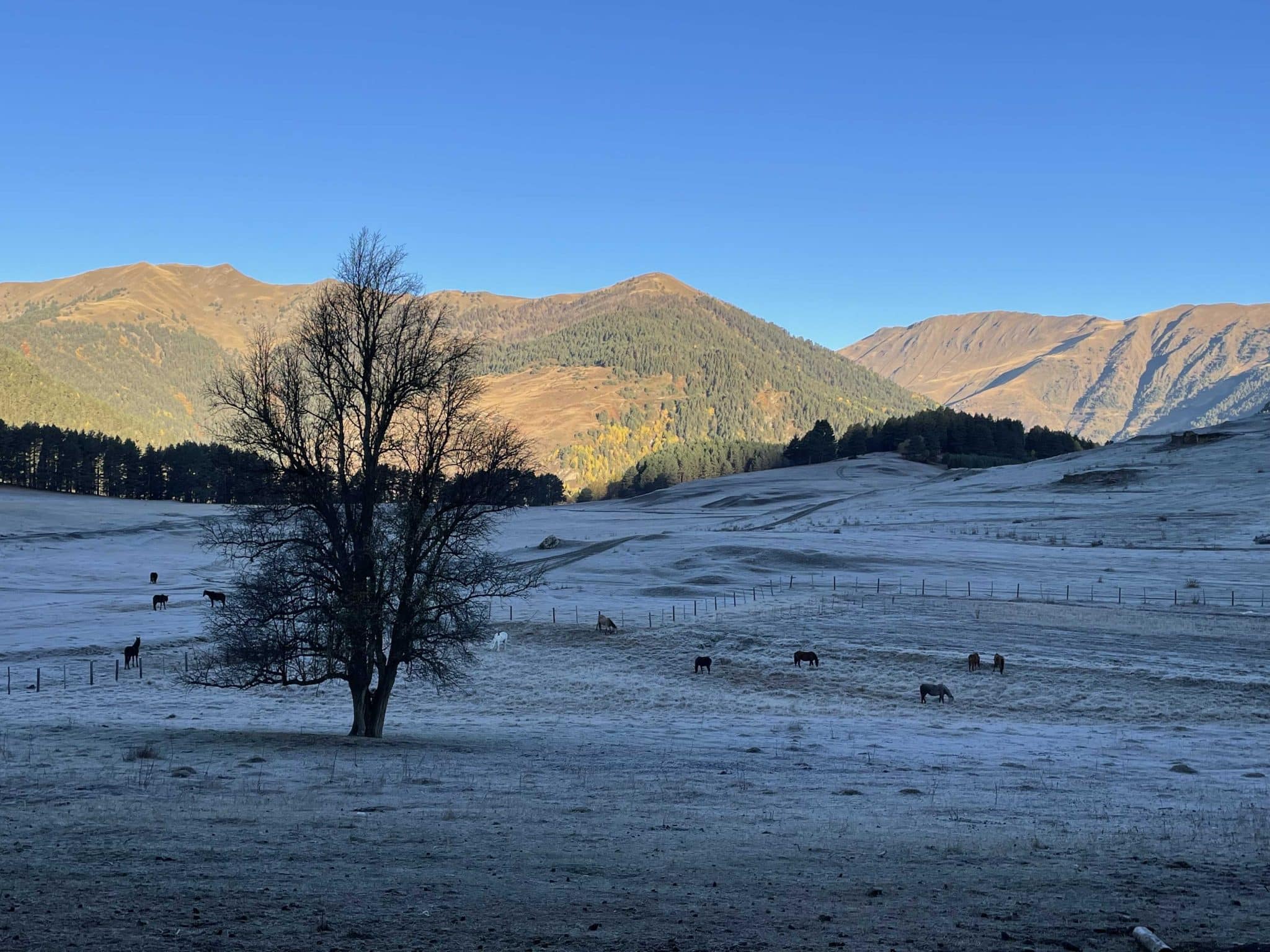
As days shorten and temperatures drop, we ride into the heart of Tusheti. Snow is possible this time of year, and nights can be as cold as -6°C. We’ll stay mostly in traditional Tush houses—simple accommodations where heating may be limited to a wood stove, and rooms aren’t insulated. A very warm sleeping bag is essential.
After our time in Tusheti, we’ll gather the horses and begin our descent from the highlands, adjusting our route as needed for weather conditions. This descent may take 1.5 to 2 days, with the possibility of a long day’s ride of over 12 hours without stops. Evening meals will be simple, made from what we carry with us.
This itinerary remains flexible, adapting to mountain conditions as we go. While we plan for around 6-7 riding days, the route may vary based on the elements. The program here offers a guide but may differ based on what the journey calls for.
Arrival in Tbilisi
Transfer to your hotel 3/4*
Meeting Point
9:30 am at your hotel in Tbilisi.
Itinerary Overview
We depart for the Kakheti region, an area rich in Georgian heritage, including history, wine, religion, and beautiful landscapes. This journey will introduce you to some of the region’s highlights.
Shuamta Monastery
We start with Shuamta, which consists of two distinct sites. We’ll visit only “new Shuamta,” a church and nunnery built in the 16th century, featuring well-preserved frescoes. “Old Shuamta,” nearby, holds three churches dating from the 6th-7th centuries.
Telavi
Our next stop is Telavi, the main city of Kakheti. Here, you’ll have 40 minutes to 1 hour of free time to explore the colorful local market, the fortress of Kakheti’s last king, Erekle II, and the town’s charming streets.
Tsinandali
After a quick picnic lunch, we’ll visit Tsinandali, a village famous for its historic winery and estate, once home to the 19th-century aristocratic poet and winemaker Alexander Chavchavadze. We’ll tour the house and gardens, built in 1835.
Alaverdi Cathedral
Our day concludes with Alaverdi Cathedral, which was built on a pagan site in the 6th century and rebuilt in the 11th century. This cathedral, once the tallest in the Soviet Union, displays architectural elements typical of the region.
Dinner and Overnight in Alvani
Finally, we travel to Alvani, a small village at the foot of the Caucasus Mountains, where a Tush family will host us for dinner and the night. We’ll also make preparations here for the expedition.
Accommodation
Guesthouse with shared bathrooms and hot showers.
After Breakfast Departure
After breakfast, we head out in a 4WD to the Tusheti region.
Crossing Abano Pass
We take the path built after World War II, carved into the rocks, and drive over the Abano Pass at 2,926 meters. The pass marks the border between Tusheti and Kakheti and offers splendid panoramic views over both regions.
Arrival in Omalo
We arrive in Omalo, the main village of Tusheti, situated at 2,000 meters in the heart of Tusheti National Park.
Continuing to the Starting Point
From Omalo, we drive further to our starting point at either Borchorna or Gogrulta. Depending on conditions, we may take a short ride (around 1 hour, with no trotting or galloping) or walk for about 40 minutes.
Accommodation
We’ll stay in a typical Tusheti house with no electricity or running water—a genuine experience of traditional life in this region.
Gogrulta
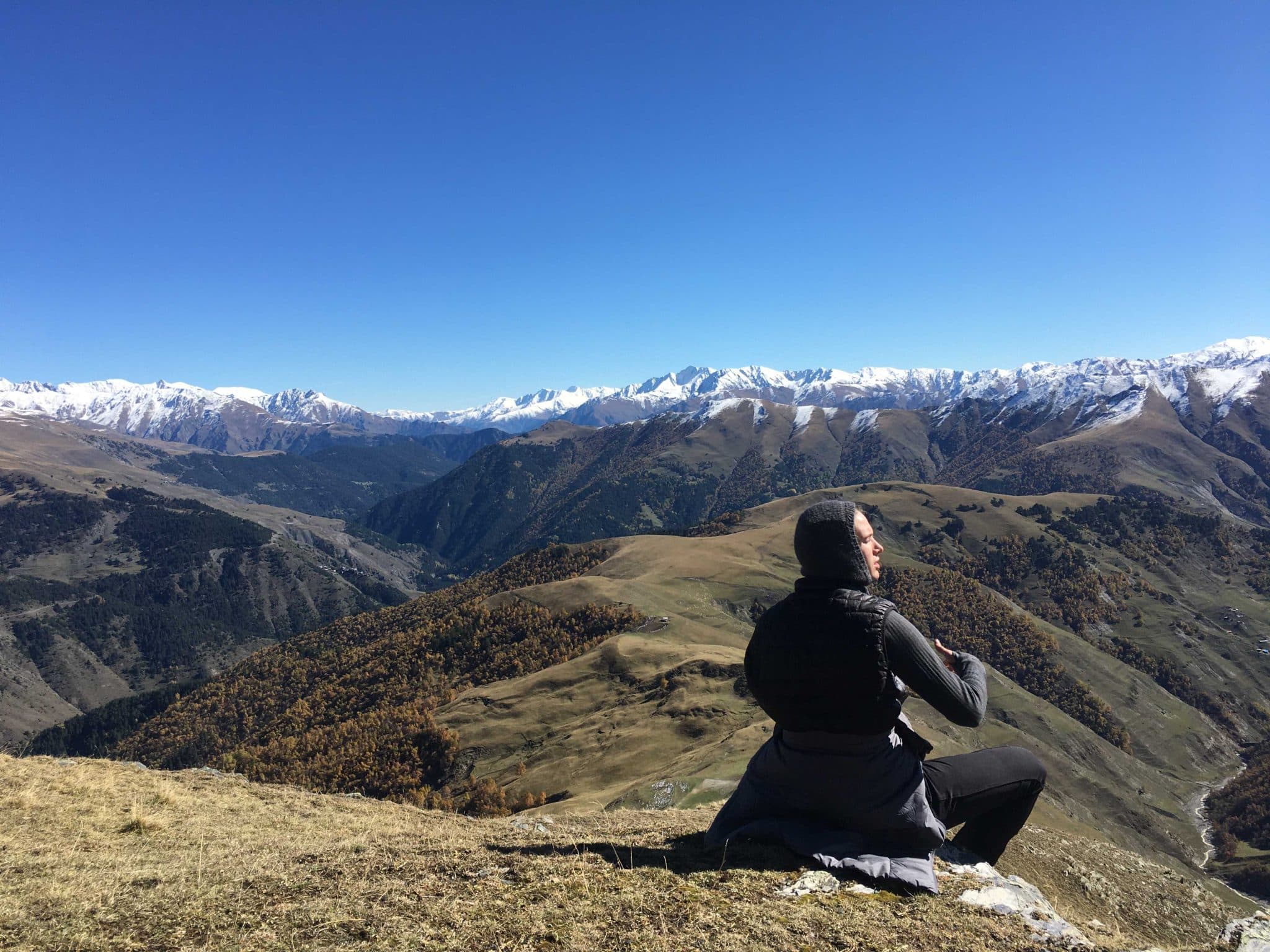
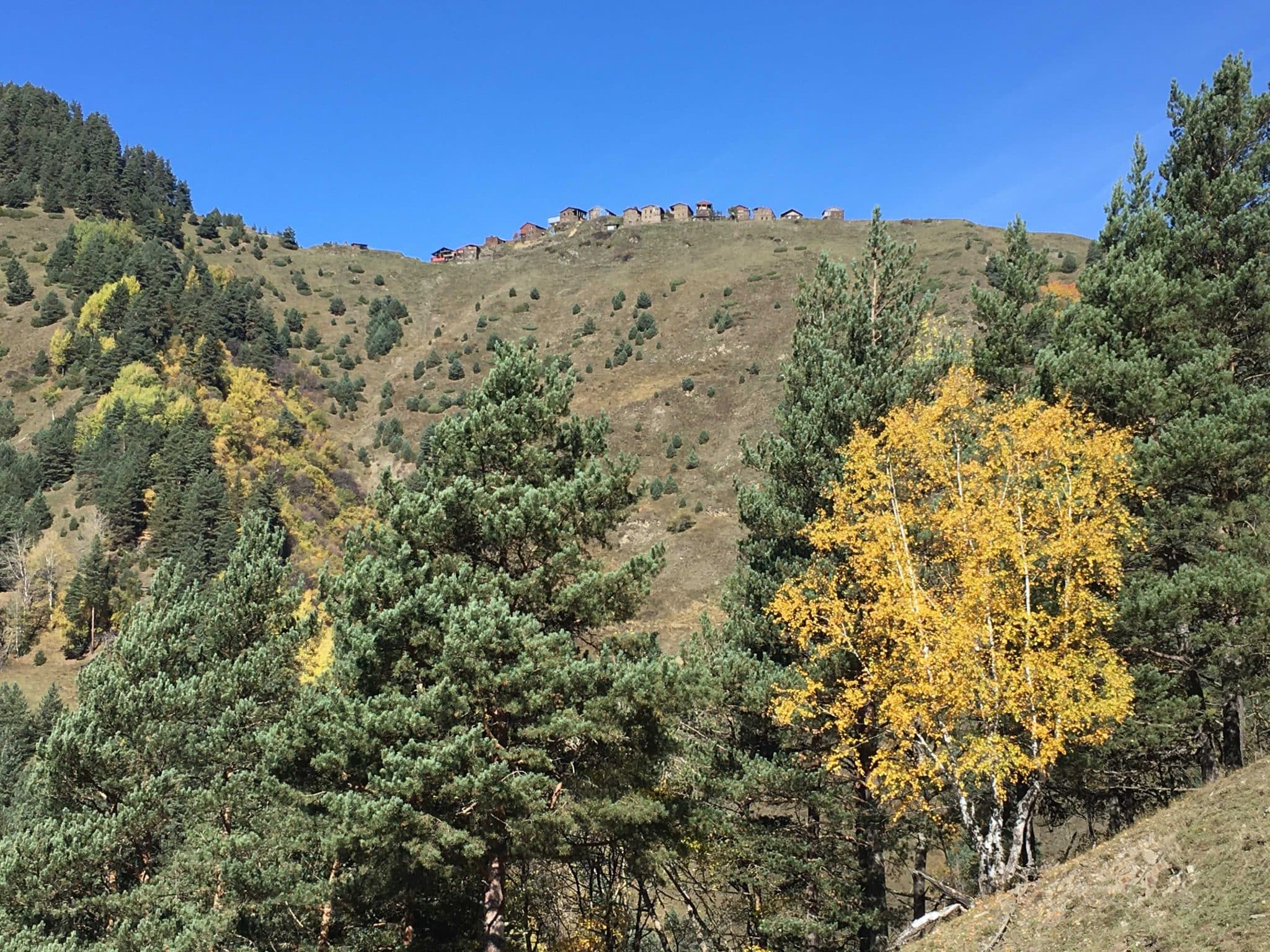
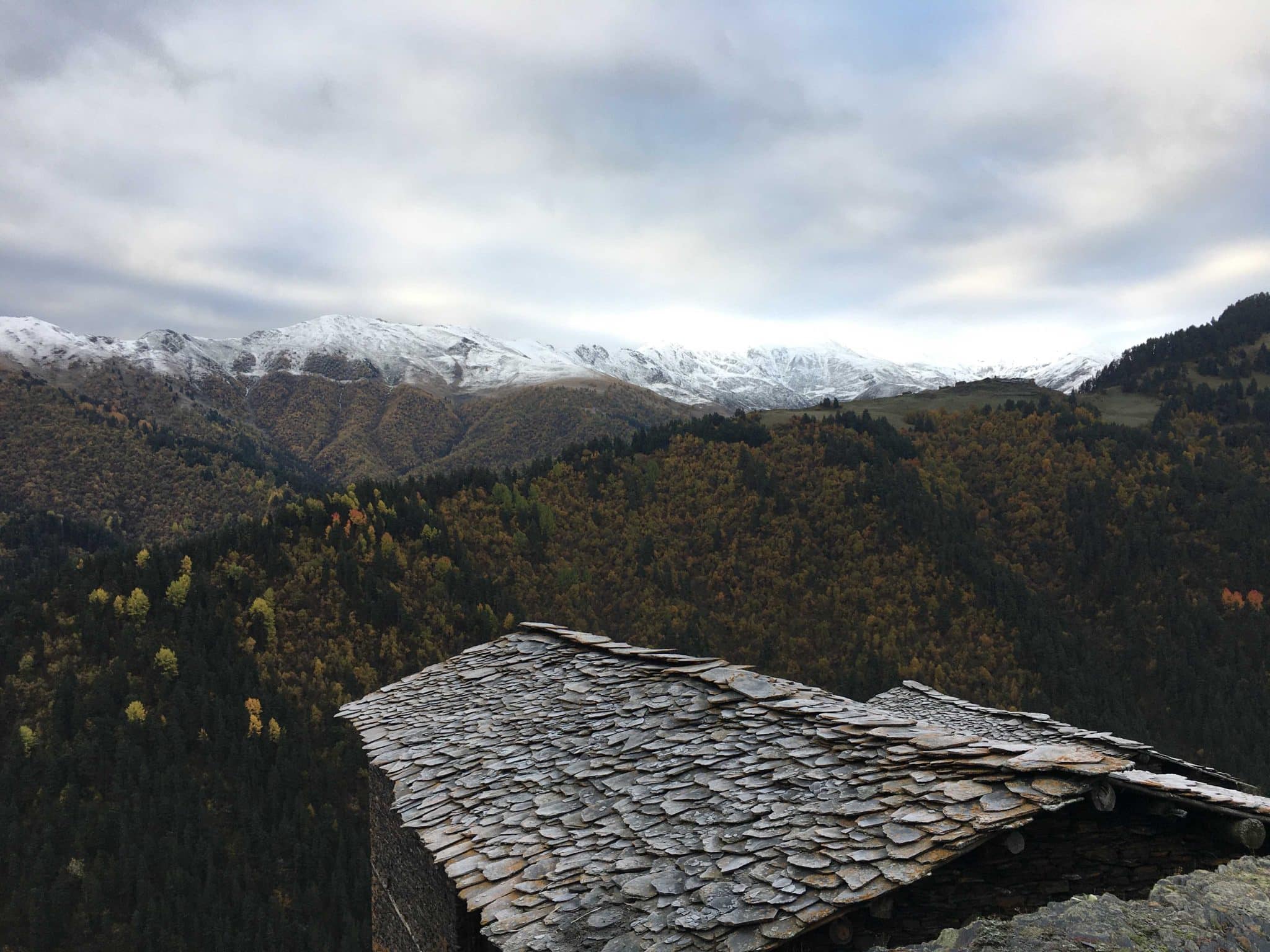
Located atop a small summit, Gogrulta offers breathtaking views of the surrounding landscape. The accommodation here is as traditional as it gets—untouched by modern amenities, providing an authentic experience that reflects how life has remained for generations. Comfort is minimal, but the authenticity is unforgettable.
Cultural Insight
In the Caucasus, pagan traditions persisted until the mid-20th century. Tusheti is dotted with ancient altars, and local deities like Otchopintre (the god of nature) and Elia (the god of weather) are still honored. Until this period, most Tush people lived here year-round, only beginning to leave after the road was built.
Accommodation Conditions
Though the living conditions here are challenging, there is something magical about the simplicity and history of this place.
Riding from Gogrulta
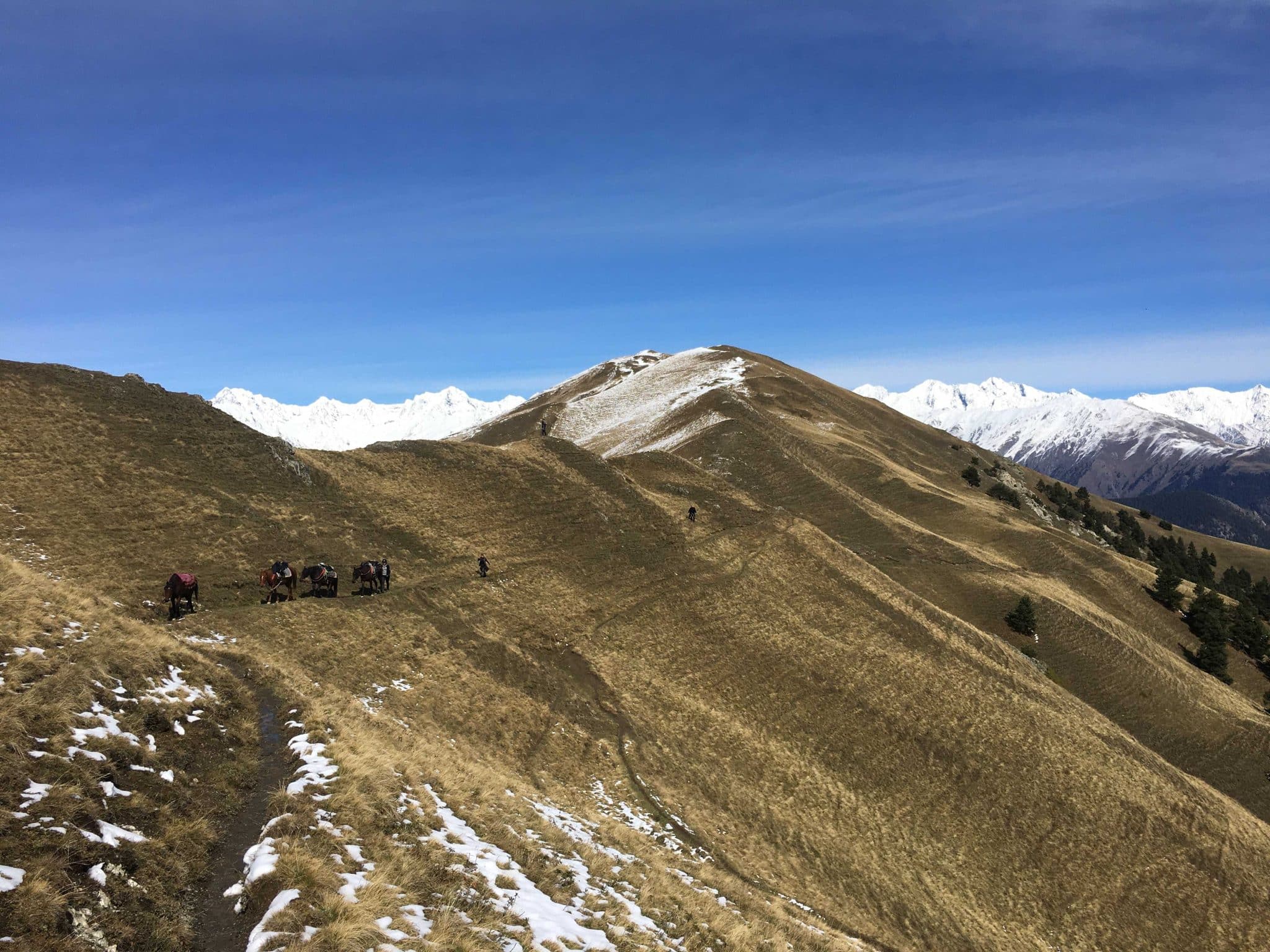
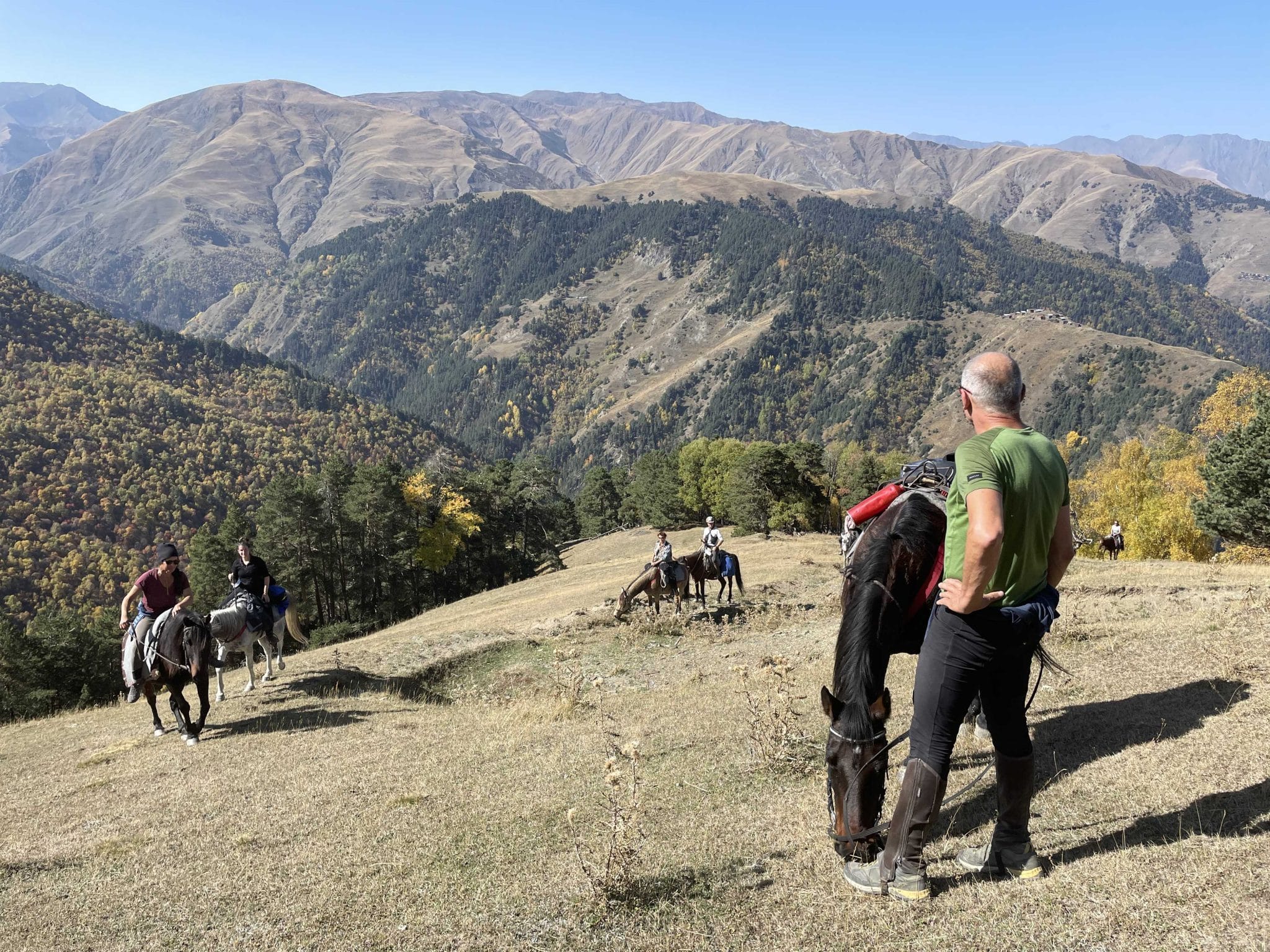
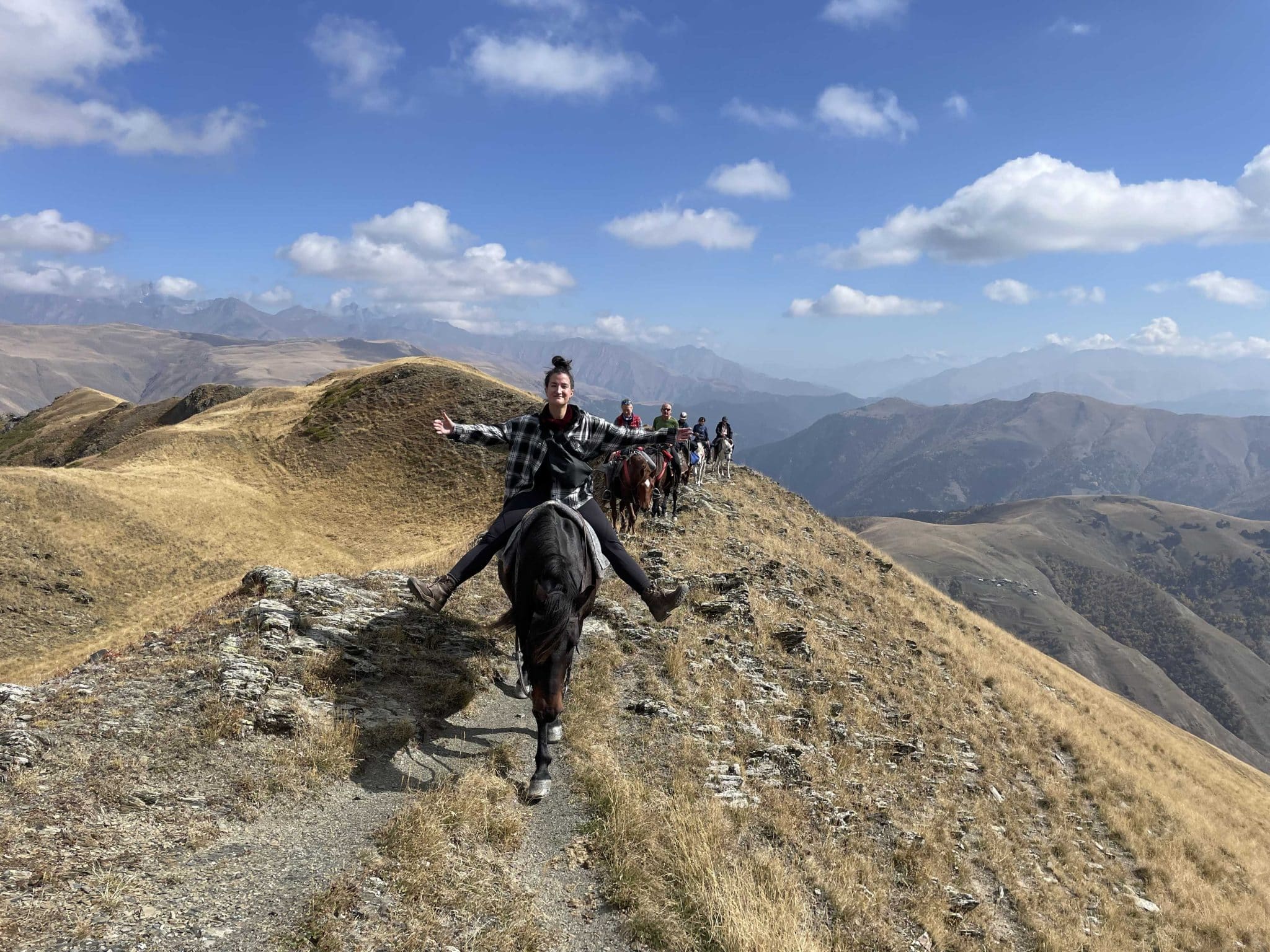
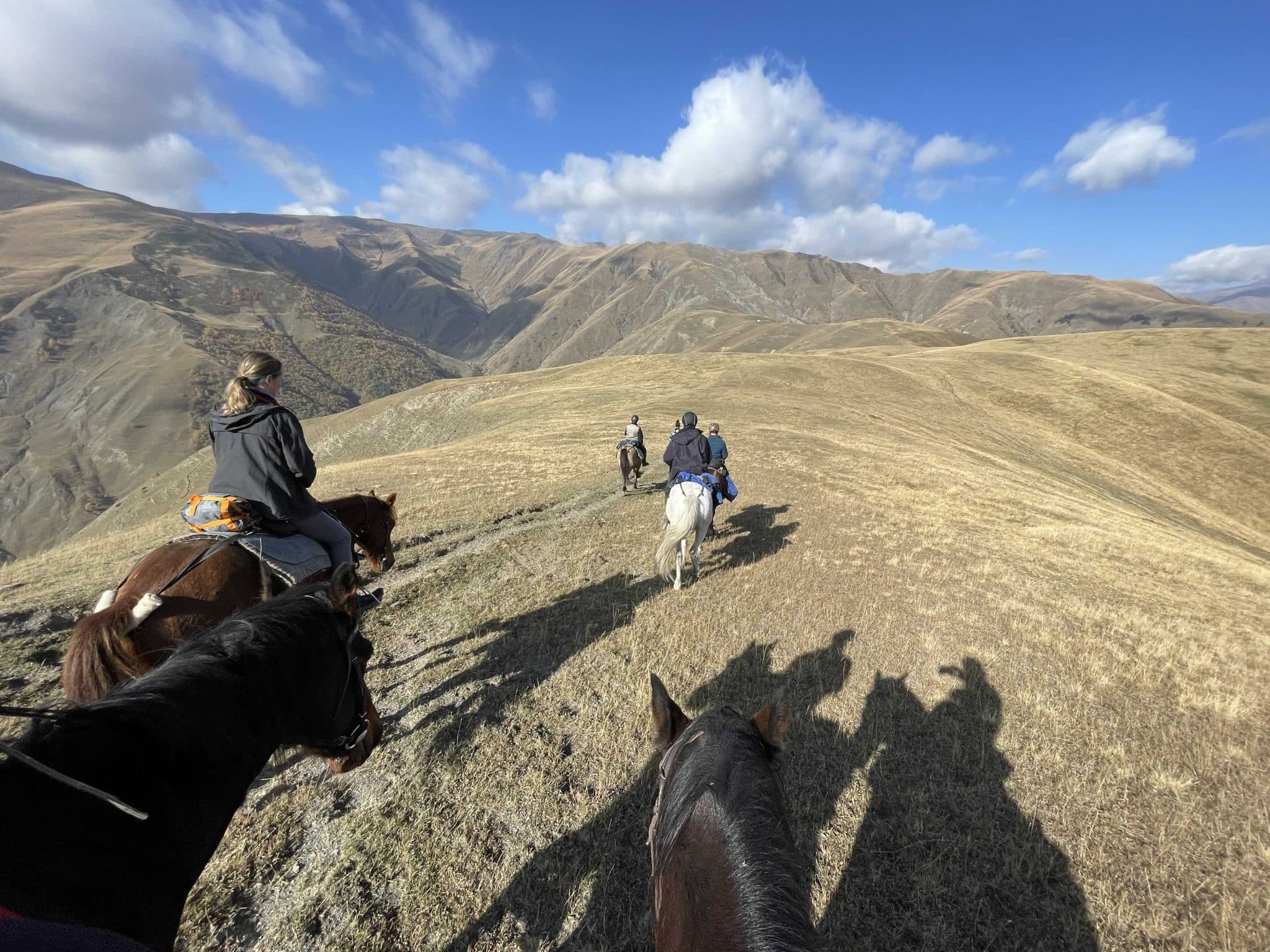
Gogrulta offers diverse riding routes. Weather permitting, we may ride over mountain passes, along ridges, or through valleys to Gometsari, with plans to return and sleep in Gogrulta. Expect a ride of 6-8 hours, with trotting or galloping based on the route, and sections that may require walking for 1 to 2.5 hours.
Accommodation
Typical house.
Departure from Gogrulta
We set out from Gogrulta with the packhorses, riding through Iliurta and along the scenic Gometsari Valley.
Route Highlights
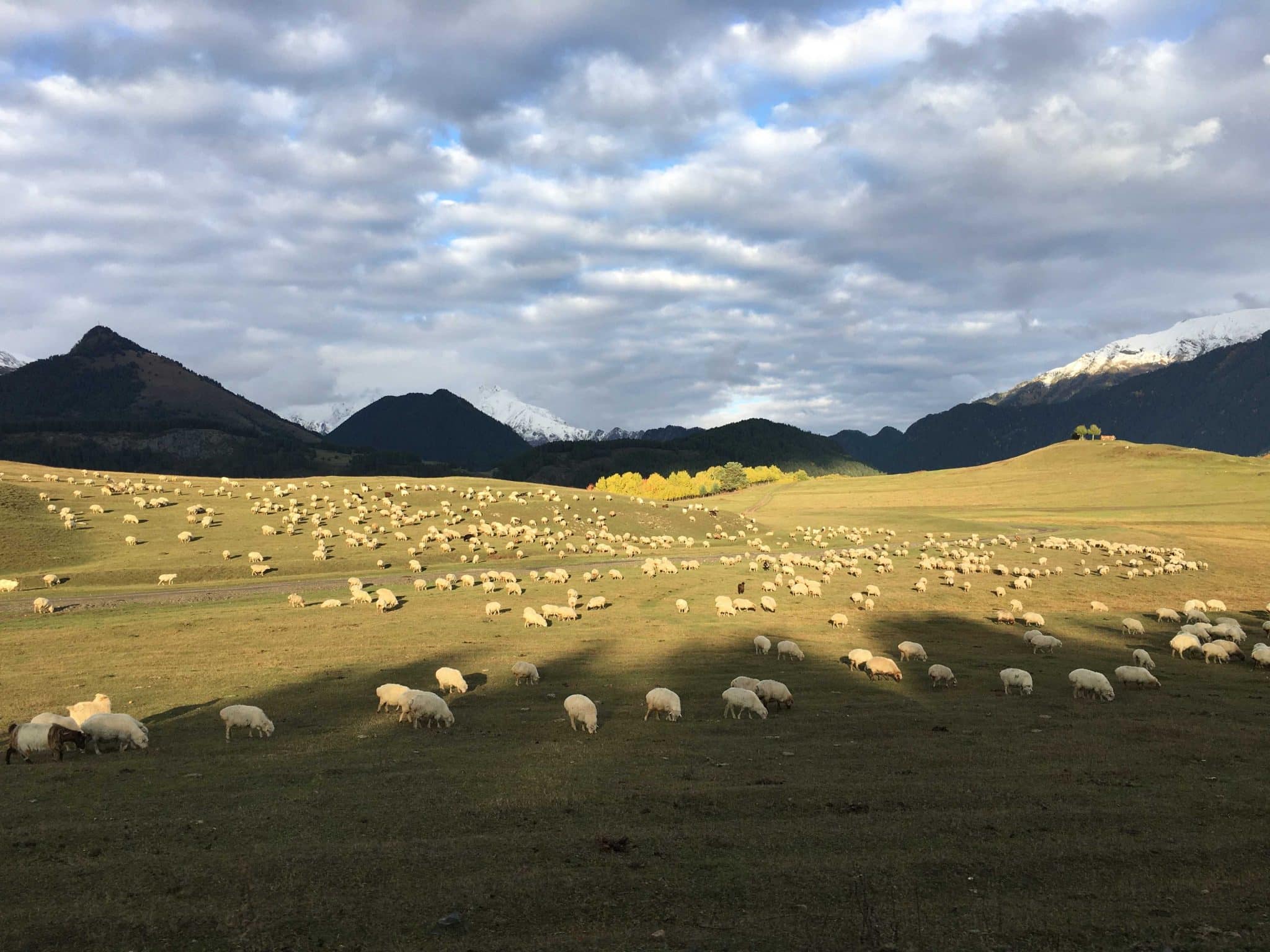
Our path takes us through Djarboseli and up to Koklata, passing numerous ancient defensive towers and pagan sites that reflect the rich history of the region. You’ll notice signs of transhumance, with herds already beginning their seasonal migration.
Ride Details
Expect about 6 hours of riding. Trotting or galloping is not possible on this route, and there will be approximately 40 minutes of walking on foot.
Accommodation
House.
Ride to the High Pass
Weather permitting, we ride up to a breathtaking pass over 3,000 meters, where we’ll be rewarded with sweeping views of the Great Caucasus Range.
Return Journey
Our route loops back to the village of Koklata, passing through Jvarboseli on the way.
Ride Details
This ride takes approximately 7-8 hours, with no opportunities for trotting or galloping. Expect about 1 hour on foot.
Accommodation
House.
We gather the horses if there are some in Koklata and we drive them to Omalo.
Ride to the Last Village of Tusheti
Our journey takes us to the last village in Tusheti before the border zone.
Route through Shenako
We pass through Shenako, one of the few villages with a church, offering a glimpse into the traditional way of life of the Tush people. After a visit, we continue riding to Diklo, the last village in this area. If conditions allow, we may also explore the ancient fortress nearby.
Return to Omalo
We ride back to Omalo, where we’ll spend the night.
Ride Details
The ride lasts approximately 6-8 hours, with some opportunities for trotting or galloping. Expect 1 to 1.5 hours on foot.
Accommodation
Guesthouse.
TRANSHUMANCE CONDITIONS:
During this part of the journey, we’ll be traveling light. Only essential items can be taken on the horses, and you’ll have access to your main luggage only upon reaching Laliskhuri. On your horse, you’ll carry just a sleeping bag. There will be no hot meals in the evening or tea in the morning, and we will sleep wherever possible along the route.
Our priority is always the horses—they are taken care of first, and only afterward do we tend to our own needs. Typically, we start each day as late as possible to make the most of our time in Tusheti on days 9 and 10. The schedule may go in this order or the reverse.
The First Day
We embark on a long journey with around 10 hours of riding and an additional 3-4 hours on foot, making it a total of 13-14 hours. Trotting or galloping will depend on the trail conditions.
Accommodation
Tent.
The Second Day
We ride toward Alvani, where the horses will remain. Today’s ride lasts around 4-5 hours. After settling the horses, we head to a guesthouse in Alvani.
End of Day
Enjoy a hot shower, followed by dinner with the local community.
Return to Tbilisi
We drive back to Tbilisi, arriving in the early afternoon, giving you free time to explore the city at your own pace.
Evening
In the evening, we’ll gather for a farewell dinner at a local restaurant.
Accommodation
Hotel (3-4 star).
Weather Contingency
If weather conditions require, we may bring the horses down a day earlier. In this case, we’ll adjust our plans with either a ride in Kakheti or an earlier return to Tbilisi, depending on the situation. (Though this hasn’t happened before, it’s always good to be prepared!)
Transfer to the airport.
Extend your stay in Georgia and definitely at least one more day in Tbilisi.
Additional overnight in Tbilisi in the same hotel.
Preserving Ancient Traditions: By joining this tour, you help sustain the centuries-old practice of transhumance, where shepherds guide their livestock between seasonal pastures. Your participation supports the continuation of this vital cultural heritage.
Empowering Local Shepherds: This tour directly benefits Tush shepherds, providing them with economic opportunities while showcasing their expertise and connection to the land.
Experiencing Symbiosis with Nature: The journey offers a rare opportunity to witness life in harmony with nature, supporting sustainable tourism that respects the delicate balance of Tusheti’s ecosystems.














Services
1. Full board.
2. Equestrian material.
3. Tents, tableware.
4. Accommodation in a guesthouse in Alvani, in some traditional houses without any confort in all
the villages we will stay in Tusheti, in tent on the transhumance day and in a hotel (2 nights) in
Tbilissi. The hotel is located in the very old center of the town, a breakfast is included. The
accommodation for this hotel will be in double room (2 persons per room). For people who are
willing to have a single room, there is an extra charge (40 euros/night), only possible in Tbilisi.
6. Table wine/tchatcha during the trek until the stocks are out.
7. 1 dinner in restaurant in Tbilisi (except alcoholic drinks) .
8. Car transfers in some private cars (Mercedes mini bus and 4WD).
10. Guides/cooker.
From your side
1. Airline ticket.
2. Full insurances compulsory
3. VERY Warm sleeping bags and floor mattress.
4. Water filter or purification pills (Actually you need neither purification pills nor water filter as the
water is very clean in this area. But CTC does not take any responsibility so it is on your own to
decide to use it or not).
5. Personal medicine.
6. Hut and glasses and sun cream.
7. Hard hats.
8. Raining clothes, very warm jacket, gloves, warm hat.
9. Small flash light or torch.
10. Small knife.
11. Water bottle with a hanker and or a carabiner
12. NO RIDING BOOTS. ONLY TREKKING SHOES
1. The luggage will be carried in some precarious conditions. We are also not responsible for some damages which can occur.
2. The airport transfers are only organised on the first day and the last day as written on the program.
If you are planing to arrive or leave before (resp.after) the due date, the transfer is on your own. You can download the Bolt application or order a taxi at the airport.
3. At Alvani, we will give you 2 waterproof bags in which you should arrange your staff. You can leave the rest of your unneeded luggage there. The weight should also be reasonable. Our horse should carry all the staffs.
4. During the trek we have to be self sufficient as once the Kakheti region left we cannot find any shops.
5. We are cooking every day (except during the transhumance), typical Georgian food and Tush specialities. Our food is coming from the local production and is organic.
6. During the trek, long way down should be walked.
7. We will go in a very secluded area and especially the first part of the trek. Some good physical and mental conditions are required. You have to take out an insurance to cover any accident, medical assistance and mountain rescue.
8. Mountain experiences are also recommended as some trails could sometimes be difficult.
9. We reserve the right to modify the itinerary if we judge for any reasons that the way is not safe enough. This decision will be taken by the main guide and should not be contradicted or discussed.
10.ATTENTION : all products derived from Codeine molecules are strictly forbidden in Georgia. Please consult http://www.rs.ge/en/5982 as well as http://www.incb.org/documents/Psychotropics/guidelines/travel-regulations/2013-travellers-update/GEO_26_August_2014_Original_travellers_II_-_LTR_-_table.pdf
Tips : Do not even try to bring such drugs into Georgia. (codein/ tremadol)
Sales terms in case of trip cancelation 2024 : Caucasus horse transhumance
• For all booking 20% of the trip amount have to be paid.
• Between 60 days and 30 days : 30% of the total trip amount have to be paid.
• Between 29 days and 10 days : 50% of the total trip amount have to be paid.
• Between 9 days and the departure day : 100% of the total trip amount have to be paid.
 Optimized by Seraphinite Accelerator